Access to clean, reliable water represents one of the fundamental requirements for modern living and business operations. The concept of constant water goes beyond simple availability, encompassing reliability, quality, and sustainability in water supply systems. For homeowners, businesses, and industrial facilities, establishing a dependable water infrastructure requires careful planning, advanced technology, and professional implementation. Understanding the components and strategies that enable uninterrupted water access helps property owners make informed decisions about their water security.
Understanding Constant Water Systems
A constant water system provides uninterrupted access to clean water regardless of external conditions, municipal supply fluctuations, or seasonal variations. These systems combine multiple technologies and infrastructure elements to create resilience against supply disruptions.
The foundation of any reliable water supply begins with the source. Municipal connections, while convenient, can experience pressure variations, quality issues, or service interruptions. Borehole drilling offers an independent water source that puts control directly in the hands of property owners. When properly executed, boreholes tap into underground aquifers that provide consistent yields year-round.
Key Components of Reliable Water Infrastructure
Creating a system that delivers constant water requires several integrated elements working in harmony:
- Primary water source (municipal connection, borehole, or combination)
- Treatment and purification systems to ensure quality standards
- Storage solutions that buffer against supply fluctuations
- Pressure management equipment for consistent delivery
- Backup power systems to maintain operations during outages
- Monitoring technology for early detection of issues
Each component plays a specific role in maintaining uninterrupted service. Storage tanks, for example, provide continuity when primary sources undergo maintenance or experience temporary issues. Treatment systems ensure that water quality remains consistent regardless of source variations.
Borehole Solutions for Water Independence
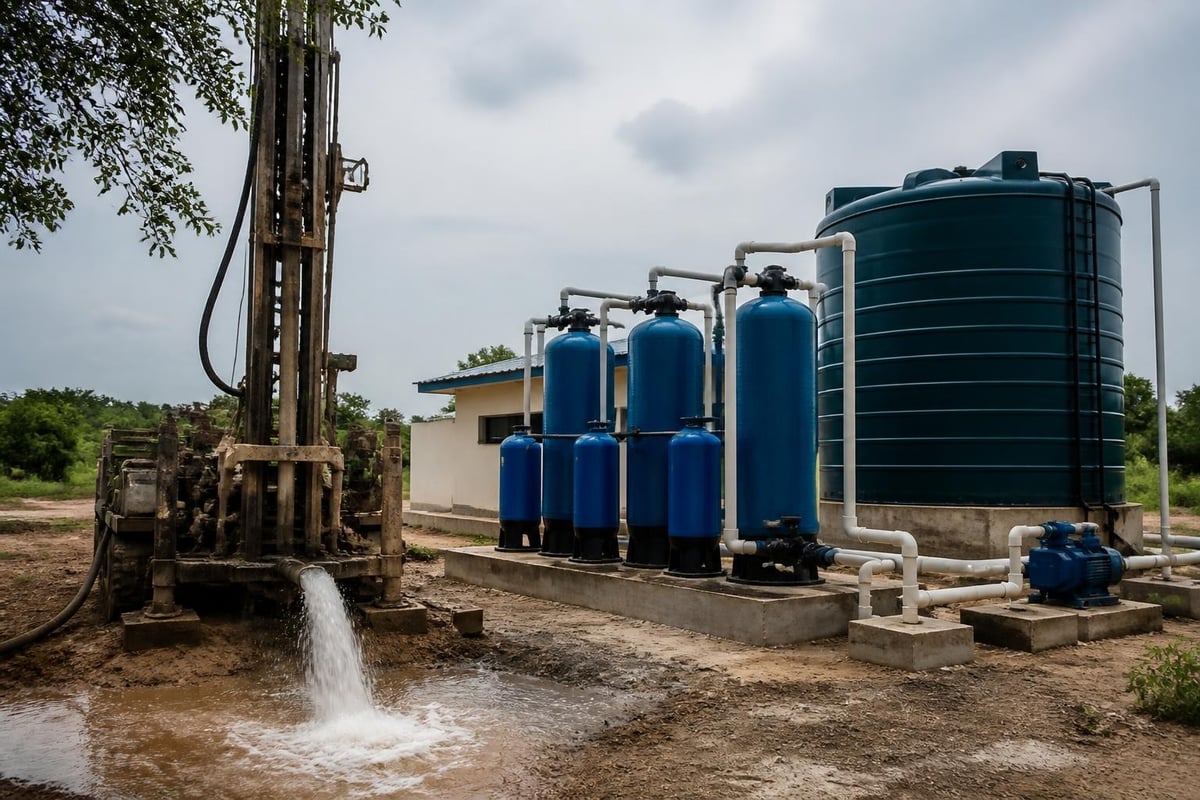
Developing an independent water source through professional borehole drilling creates the foundation for true water security. This approach offers protection against municipal supply restrictions, reduces long-term costs, and provides control over water quality.
Site Assessment and Drilling Process
Successful borehole implementation begins with comprehensive geological surveys. Hydrogeological assessments identify optimal drilling locations based on aquifer depth, water quality, and sustainable yield rates. Professional drilling operations follow these steps:
- Geological survey and site evaluation
- Permit acquisition and regulatory compliance
- Drilling to appropriate depth for target aquifer
- Well casing installation and sealing
- Pump system installation and testing
- Water quality analysis and treatment specification
- System commissioning and performance verification
The drilling depth varies significantly based on location, typically ranging from 50 to 400 feet for residential applications. Commercial and industrial installations may require deeper wells to meet higher volume demands.
| Borehole Depth | Typical Yield | Best Applications | Average Lifespan |
|---|---|---|---|
| 50-150 feet | 5-15 GPM | Residential properties | 25-30 years |
| 150-250 feet | 15-30 GPM | Small commercial facilities | 30-40 years |
| 250-400 feet | 30-100 GPM | Industrial operations | 40-50+ years |
Professional installation ensures that boreholes deliver constant water supplies while protecting aquifer resources. Proper casing prevents contamination from surface water, while appropriate pump sizing matches consumption patterns without over-extracting from the aquifer.
Water Treatment for Consistent Quality
Raw water from boreholes or municipal sources often contains minerals, contaminants, or biological matter that affects taste, safety, and usability. Advanced purification systems transform variable source water into consistent, high-quality output.
Treatment Technologies and Applications
Different water sources present unique challenges requiring tailored treatment approaches. Ground water typically contains elevated mineral content, while surface sources may have higher biological contamination risks.
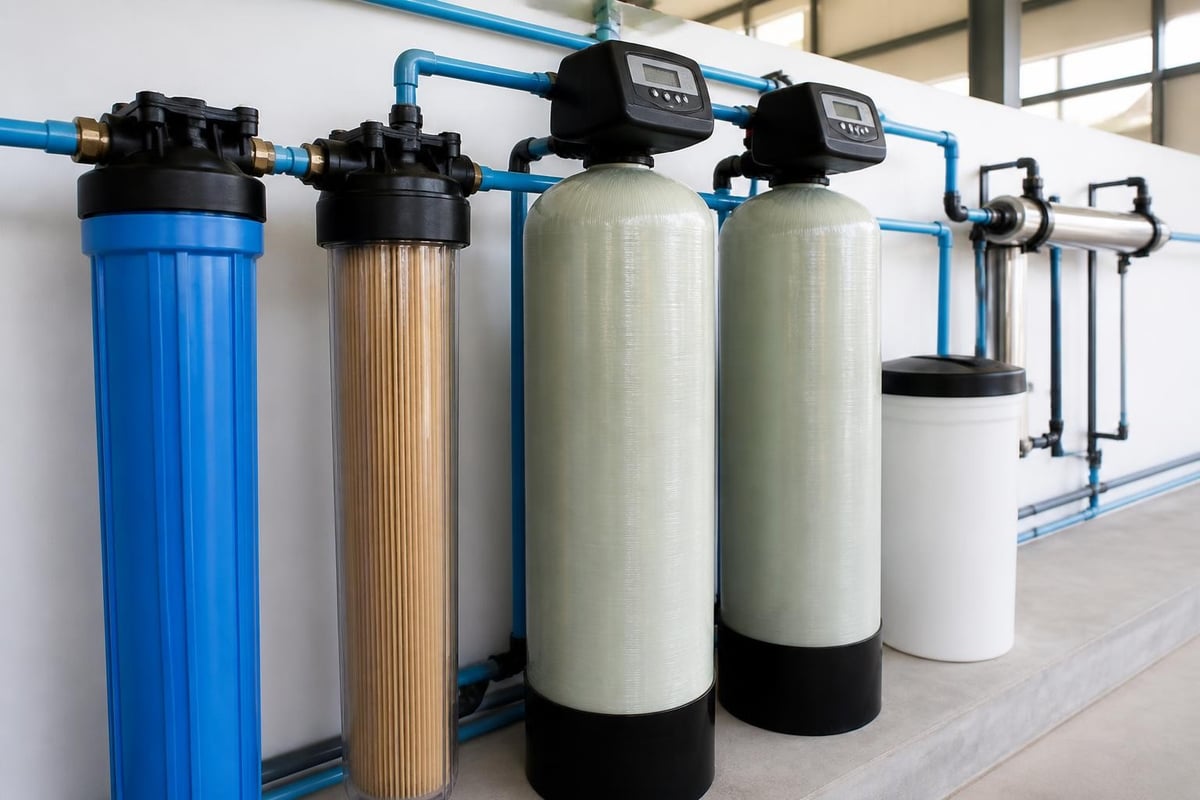
Modern treatment systems employ multiple stages:
- Sediment filtration removes particles and suspended solids
- Carbon filtration addresses taste, odor, and organic compounds
- Water softening eliminates hardness minerals like calcium and magnesium
- Reverse osmosis provides comprehensive contaminant removal
- UV sterilization destroys bacteria, viruses, and other microorganisms
- Remineralization adds beneficial minerals to purified water
Selecting appropriate treatment technologies depends on source water analysis results. Comprehensive testing identifies specific contaminants and their concentrations, enabling precise system design. A property with high iron content requires different treatment than one with bacterial contamination issues.
Maintenance Requirements for Sustained Performance
Treatment systems require regular maintenance to continue delivering constant water quality. Filter replacements, membrane cleaning, and system sanitization prevent performance degradation. Professional maintenance schedules typically include:
- Monthly filter inspection and replacement as needed
- Quarterly system performance testing
- Semi-annual membrane cleaning and evaluation
- Annual comprehensive water quality analysis
- Equipment calibration and adjustment
Automated monitoring systems track key performance indicators, alerting operators to issues before they impact water quality. These systems measure flow rates, pressure differentials, and contaminant levels in real-time.
Storage Infrastructure for Supply Continuity
Even with reliable sources and excellent treatment, storage capacity ensures constant water availability during peak demand periods, maintenance windows, or source interruptions. Strategic storage design balances capacity, space requirements, and cost considerations.
Sizing Storage for Operational Needs
Appropriate storage capacity depends on consumption patterns, source reliability, and acceptable risk levels. Residential properties typically benefit from storage equivalent to one to three days of average consumption. Commercial and industrial facilities often require larger reserves.
| Property Type | Daily Usage | Recommended Storage | Reserve Duration |
|---|---|---|---|
| Single-family home | 300-500 gallons | 500-1,000 gallons | 1-2 days |
| Small business | 1,000-2,000 gallons | 2,000-4,000 gallons | 2-3 days |
| Industrial facility | 5,000-20,000 gallons | 10,000-40,000 gallons | 2-4 days |
Storage solutions range from atmospheric tanks to pressurized systems. Atmospheric tanks require booster pumps for distribution, while pressure vessels maintain system pressure directly. Material selection impacts longevity, with food-grade polyethylene, fiberglass, and stainless steel offering different advantages.
Proper installation includes overflow protection, ventilation, access for cleaning, and isolation valves for maintenance. Tank placement considerations include foundation requirements, proximity to consumption points, and protection from temperature extremes.
Pressure Management and Distribution
Delivering constant water at appropriate pressure throughout a property requires careful system design. Pressure that's too low causes fixture performance issues, while excessive pressure wastes water and stresses plumbing components.
Pump Systems and Pressure Regulation
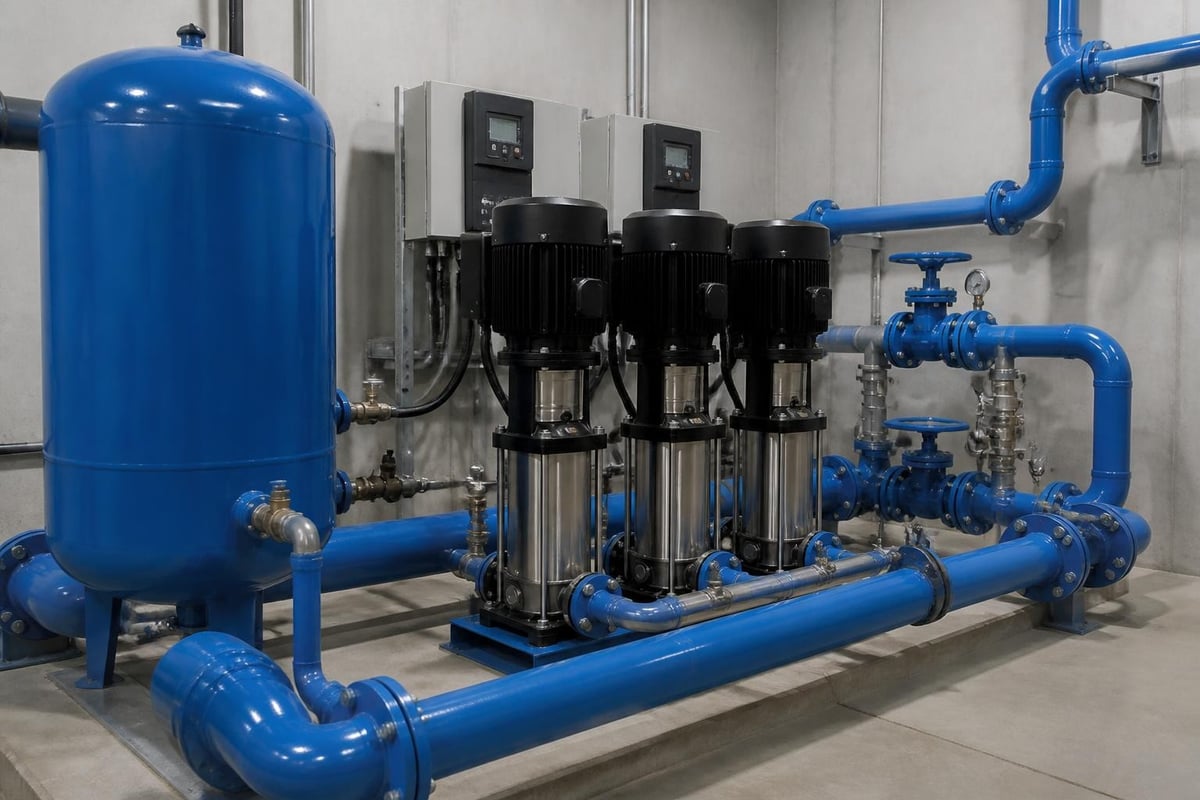
Variable frequency drive (VFD) pumps adjust output to match demand, maintaining steady pressure despite flow variations. These systems offer significant advantages over traditional constant-speed pumps:
- Consistent pressure across varying demand levels
- Reduced energy consumption through optimized operation
- Extended equipment lifespan from reduced cycling
- Quieter operation with gradual speed changes
- Better surge protection for plumbing systems
Pressure tanks complement pump systems by reducing cycling frequency. When demand drops, the tank supplies water without requiring pump activation. This arrangement extends pump life while ensuring immediate response to demand changes.
Target pressure ranges typically fall between 40-60 PSI for residential applications. Commercial facilities may require higher pressures for specific equipment or multi-story distribution. Pressure-reducing valves protect fixtures and appliances from excessive pressure while maintaining adequate delivery throughout the system.
Power Backup and System Resilience
Electrical outages threaten water availability in systems dependent on pumps and treatment equipment. Comprehensive backup power solutions ensure constant water access regardless of grid reliability.
Generator and Alternative Power Options
Standby generators automatically activate during power failures, maintaining full system operation. Proper sizing accounts for simultaneous operation of pumps, treatment equipment, and essential building systems. Natural gas or propane generators offer advantages over diesel in residential applications, including cleaner operation and simplified fuel management.
Solar power systems with battery storage provide renewable backup options. While initial investment exceeds traditional generators, operating costs remain minimal and environmental impact is reduced. Hybrid approaches combine solar generation with grid connection and battery backup for maximum reliability.
Critical system components require uninterruptible power supply (UPS) protection for seamless transitions during power events. Controllers, monitoring equipment, and UV sterilizers benefit from UPS systems that bridge gaps during generator startup.
Water Quality Monitoring and Testing
Maintaining constant water quality requires ongoing verification through testing and monitoring. Changes in source water characteristics, treatment system performance, or distribution infrastructure can affect delivered water quality.
Testing Protocols and Frequency
Comprehensive water analysis examines physical, chemical, and biological parameters:
- pH levels indicating acidity or alkalinity
- Total dissolved solids measuring overall mineral content
- Hardness quantifying calcium and magnesium concentration
- Iron and manganese which cause staining and taste issues
- Bacterial contamination including coliform and E. coli
- Heavy metals such as lead, arsenic, and mercury
- Nitrates and nitrites from agricultural or septic sources
Professional laboratories conduct detailed analysis, providing actionable data for system optimization. Testing frequency depends on water source and usage, with quarterly testing appropriate for most installations. Higher-risk sources or sensitive applications warrant monthly analysis.
Automated monitoring equipment tracks real-time parameters, enabling immediate response to quality changes. These systems measure conductivity, turbidity, pH, and chlorine levels continuously, logging data for trend analysis.
Regulatory Compliance and Standards
Water systems must meet applicable health and safety regulations regardless of source. Understanding regulatory requirements ensures constant water that protects occupant health while avoiding compliance issues.
Applicable Standards and Certifications
Private water systems fall under various regulatory frameworks depending on location and usage. Residential boreholes typically face less stringent requirements than commercial installations, but all systems benefit from adherence to industry standards.
Key regulatory considerations include:
- Well construction standards and setback requirements
- Treatment system certifications (NSF/ANSI standards)
- Backflow prevention for public health protection
- Water quality standards for intended use
- Discharge permits for treatment system waste
- Documentation and record-keeping requirements
Treatment equipment should carry appropriate NSF International certifications verifying performance claims. These certifications confirm that systems remove specific contaminants to stated levels under defined conditions.
Long-Term Maintenance and System Optimization
Sustaining constant water availability over decades requires proactive maintenance and periodic system upgrades. Well-maintained infrastructure delivers reliable service while poorly maintained systems experience increasing failures and declining performance.
Preventive Maintenance Programs
Structured maintenance schedules address components before failures occur. Professional service programs typically include:
- Pump inspection and bearing lubrication
- Pressure tank pre-charge verification
- Control system calibration and testing
- Filter replacement on scheduled intervals
- Storage tank cleaning and sanitization
- Distribution system leak detection
- Treatment chemical level monitoring
Documentation of maintenance activities creates valuable historical records. These logs help identify recurring issues, track component lifespan, and plan future upgrades.
System optimization reviews conducted every three to five years evaluate performance against current needs. Changes in consumption patterns, available technologies, or regulatory requirements may warrant equipment updates or process modifications.
Integration with Building Systems
Modern properties benefit from integration between water systems and building automation platforms. Smart building integration enhances constant water delivery through coordinated control and monitoring.
Automation and Remote Management
Connected systems enable remote monitoring of water quality, storage levels, and equipment status. Property managers receive alerts about potential issues before they impact service, allowing proactive intervention.
Integration opportunities include:
- Leak detection systems that automatically shut off supply
- Consumption tracking for usage optimization
- Demand-based treatment system operation
- Predictive maintenance scheduling using performance data
- Energy management coordination between water and HVAC systems
Mobile applications provide real-time system visibility and control from anywhere. This capability proves particularly valuable for commercial properties with multiple locations or seasonal facilities requiring remote management.
Cost Considerations and Return on Investment
Implementing constant water infrastructure represents a significant investment that delivers long-term value through reduced operating costs, increased property value, and enhanced operational security.
Financial Analysis Framework
Total cost of ownership extends beyond initial installation, encompassing operating expenses, maintenance, and eventual replacement costs. Independent water systems typically achieve payback within five to ten years through eliminated or reduced municipal water bills.
| Cost Category | Initial Investment | Annual Operating | 10-Year Total |
|---|---|---|---|
| Borehole + Treatment | $15,000-$35,000 | $800-$1,500 | $23,000-$50,000 |
| Municipal Connection | $2,000-$5,000 | $3,000-$6,000 | $32,000-$65,000 |
| Hybrid System | $18,000-$40,000 | $1,200-$2,500 | $30,000-$65,000 |
Properties with high consumption or expensive municipal rates achieve faster payback. Industrial facilities using thousands of gallons daily may recover investments within three to five years.
Beyond direct financial returns, constant water systems provide insurance against supply disruptions that could halt operations. For businesses dependent on reliable water access, this operational security justifies investment independent of monetary savings.
Establishing constant water access requires expertise across geology, engineering, treatment technology, and infrastructure design. Whether you're planning a new construction project, upgrading existing systems, or seeking independence from unreliable municipal supplies, professional implementation ensures optimal results. Terrabuilds Group specializes in comprehensive water solutions including borehole drilling, advanced treatment systems, and complete infrastructure development, delivering the reliability your property deserves.