The global water infrastructure landscape demands more than just technical know-how. As regulatory frameworks tighten and emerging contaminants like PFAS challenge traditional treatment methods, selecting qualified water treatment contractors has become a strategic decision for municipalities, commercial facilities, and residential developments. These specialized professionals bridge the gap between engineering design and operational reality, delivering systems that meet stringent water quality standards while ensuring long-term reliability and regulatory compliance.
Understanding the Role of Water Treatment Contractors
Water treatment contractors serve as the critical link between conceptual designs and functioning water purification systems. Their responsibilities extend far beyond installation work, encompassing system design, equipment procurement, regulatory compliance, and ongoing maintenance support.
Core Competencies and Service Offerings
Professional water treatment contractors bring a diverse skill set to every project. They conduct detailed water quality assessments, identifying specific contaminants and treatment requirements. These specialists design customized treatment trains that address unique challenges, from basic filtration to advanced oxidation processes.
Key services typically include:
- Comprehensive water quality testing and analysis
- Treatment system design and engineering
- Equipment selection and procurement
- Installation and commissioning
- Operator training and documentation
- Preventive maintenance programs
- Emergency repair services
- Regulatory compliance reporting
The most effective contractors maintain relationships with equipment manufacturers, ensuring access to the latest treatment technologies. They stay current on regulatory changes, including evolving standards for emerging contaminants. Their expertise covers mechanical, electrical, and chemical aspects of water treatment systems.

Regulatory Compliance and Certification Standards
The water treatment industry operates under rigorous oversight from federal, state, and local authorities. Contractors must navigate complex regulatory landscapes, ensuring systems meet Safe Drinking Water Act requirements and state-specific standards.
Professional certifications validate contractor competency and industry knowledge. The Water Quality Association offers certification programs that demonstrate installer expertise and adherence to best practices. These credentials assure clients that contractors possess verified skills in proper installation techniques, safety protocols, and quality assurance.
Compliance extends beyond initial installation. Water treatment contractors must understand ongoing monitoring requirements, reporting obligations, and performance verification protocols. They implement systems that facilitate regulatory compliance throughout the operational lifespan.
Selecting the Right Water Treatment Contractors
Choosing qualified water treatment contractors requires a systematic evaluation process. The decision impacts not only initial project success but long-term system performance and operational costs.
Essential Evaluation Criteria
Experience matters significantly in water treatment applications. Contractors should demonstrate proven success with systems similar to your specific needs, whether municipal-scale treatment plants, commercial reverse osmosis systems, or specialized industrial applications.
| Evaluation Factor | What to Assess | Why It Matters |
|---|---|---|
| Technical Expertise | Specific treatment technologies, system sizes handled | Ensures capability for your project complexity |
| Licensing & Certifications | State contractor licenses, WQA certifications, operator credentials | Confirms regulatory compliance and professional standards |
| Project Portfolio | Similar systems, comparable scale, relevant industries | Validates experience with your application type |
| Financial Stability | Bonding capacity, insurance coverage, references | Protects against project disruption |
| Service Capabilities | In-house vs. subcontracted work, emergency response | Impacts quality control and long-term support |
Request detailed proposals that outline methodology, timeline, equipment specifications, and total project costs. Transparent contractors provide itemized pricing, explaining the rationale behind equipment selections and design decisions.
Procurement Considerations for Funded Projects
Projects utilizing public funding face additional procurement requirements. Water infrastructure financing often comes with specific contracting obligations that impact how water treatment contractors are selected and managed.
The EPA’s Water Infrastructure Finance and Innovation Act program establishes federal requirements for procurement and contract language on large water treatment projects. Contractors working on WIFIA-funded initiatives must comply with Davis-Bacon prevailing wage requirements, American Iron and Steel provisions, and other federal mandates.
State revolving fund (SRF) programs impose similar obligations. For example, California’s SRF guidance details construction contracting and prevailing wage requirements that contractors must follow. Understanding these frameworks before project initiation prevents costly compliance issues.
Funded project procurement typically requires:
- Competitive bidding processes with public notice
- Prevailing wage compliance documentation
- Buy American/American Iron and Steel compliance
- Minority and women-owned business participation goals
- Detailed contract administration and reporting
- Performance and payment bonds
Emerging Challenges in Water Treatment
The water treatment industry faces evolving challenges that demand specialized contractor expertise. Staying ahead of these issues separates exceptional contractors from merely adequate service providers.
PFAS Removal and Advanced Contaminant Treatment
Per- and polyfluoroalkyl substances (PFAS) represent one of the most significant emerging contaminant challenges. These "forever chemicals" persist in the environment and require advanced treatment technologies that many existing systems cannot address.
Water treatment contractors specializing in PFAS removal must understand multiple treatment approaches. The American Water Works Association provides technical guidance on occurrence, monitoring, and treatment options including granular activated carbon, ion exchange, and advanced oxidation processes.
Effective PFAS treatment requires careful system design considering influent concentrations, treatment goals, waste stream management, and operational costs. Contractors must evaluate lifecycle costs, including media replacement frequency and disposal requirements for PFAS-laden waste.
Small System and Rural Community Solutions
Small water supplies present unique challenges requiring specialized contractor approaches. These systems often lack economies of scale, struggle with operator availability, and face funding constraints.
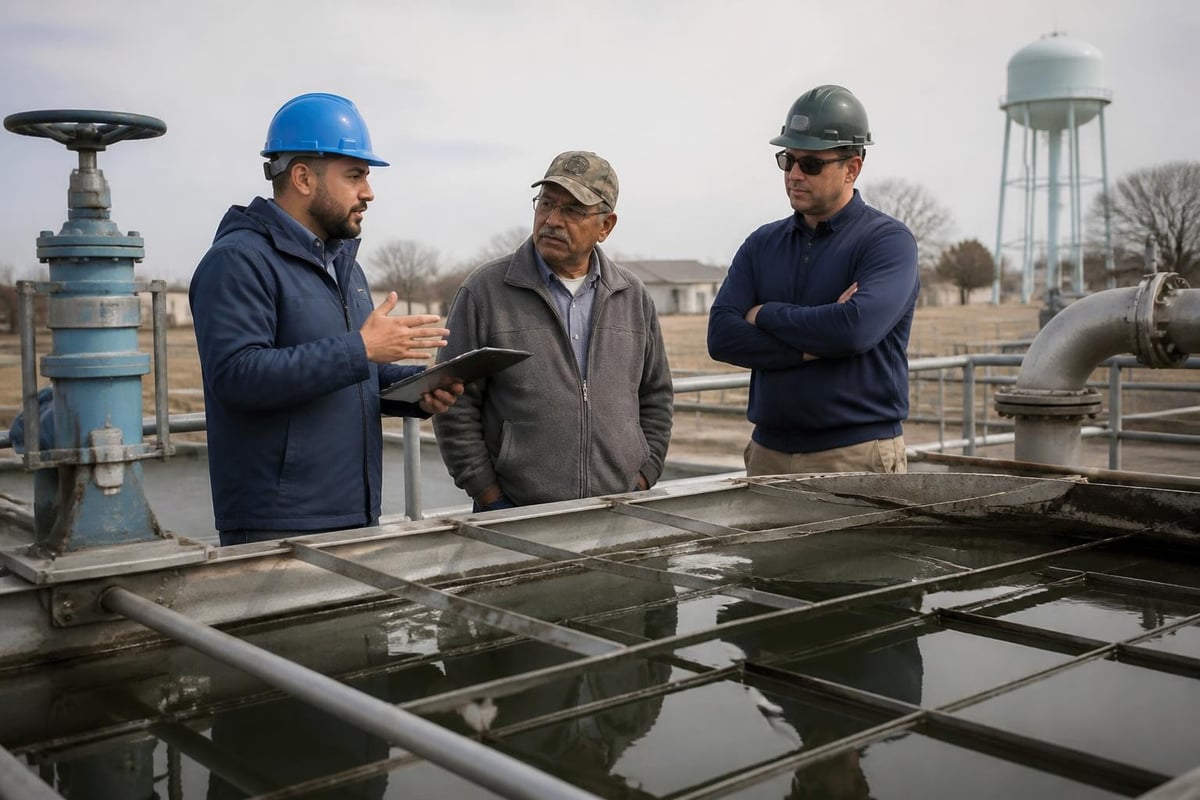
The World Health Organization’s guidelines for small water supplies provide technical guidance and surveillance approaches relevant to contractors working with rural and small community treatment projects. Water treatment contractors serving these communities must design systems balancing technical effectiveness with operational simplicity.
Successful small system contractors prioritize:
- Simple, robust treatment technologies requiring minimal operator intervention
- Remote monitoring and automated alarm systems
- Preventive maintenance programs tailored to limited staffing
- Cost-effective solutions fitting constrained budgets
- Community engagement and operator training
These projects demand contractors who understand not just engineering but also the socioeconomic realities of rural water service.
Contract Structures and Management Approaches
How you engage water treatment contractors significantly impacts project outcomes. Different contract structures suit different project types and organizational capabilities.
Design-Build vs. Design-Bid-Build
Traditional design-bid-build approaches separate design and construction responsibilities. The owner or their consultant develops detailed specifications, then water treatment contractors bid on construction only. This model provides maximum owner control but can lead to conflicts when design assumptions meet field realities.
Design-build arrangements consolidate design and construction responsibility with a single entity. Water treatment contractors assume greater project risk but gain flexibility to optimize designs during construction. This approach often accelerates project delivery and reduces change orders.
| Contract Model | Advantages | Disadvantages | Best Used When |
|---|---|---|---|
| Design-Bid-Build | Maximum owner control, competitive pricing, clear accountability separation | Longer project duration, potential for design-construction conflicts | Complex projects needing detailed owner oversight |
| Design-Build | Single point of responsibility, faster delivery, integrated problem-solving | Less owner control, harder to compare bids | Schedule is critical, owner wants reduced management burden |
| CMAR (Construction Manager at Risk) | Early contractor input, competitive subcontractor bidding, shared risk | More complex management, requires sophisticated owner | Large projects needing early constructability input |
Operations and Maintenance Contracting
Beyond construction, many organizations contract ongoing operations to specialized water treatment contractors. The EPA’s guide for hiring contract operators offers practical checklists and sample contract considerations for public water systems.
Contract operations work well for small systems lacking full-time operator resources or organizations seeking specialized expertise. Effective contracts clearly define performance expectations, response times, reporting requirements, and compensation structures.
Successful O&M contracts specify:
- Minimum operator visit frequency and duration
- Response time requirements for emergencies
- Preventive maintenance schedules and procedures
- Water quality monitoring and reporting obligations
- Performance metrics and service level agreements
- Equipment repair and replacement responsibilities
- Training and knowledge transfer requirements
Regular performance reviews ensure contractors meet obligations and identify improvement opportunities.
Quality Assurance and Project Documentation
Rigorous quality assurance separates professional water treatment contractors from less capable competitors. Comprehensive documentation protects all parties and ensures long-term system success.
Installation Standards and Testing Protocols
Professional contractors follow manufacturer specifications precisely, understanding that deviations compromise performance and warranties. They document installations photographically, creating records of as-built conditions that prove invaluable for future troubleshooting and modifications.

Comprehensive testing validates system performance before handover. Water treatment contractors conduct multiple verification steps including pressure testing, disinfection procedures, flow verification, and water quality confirmation. They generate test reports documenting that systems meet design specifications and regulatory requirements.
Training and Knowledge Transfer
System handover extends beyond physical construction completion. Professional water treatment contractors provide thorough operator training covering routine operations, preventive maintenance, troubleshooting procedures, and safety protocols.
The WQA Certified Installer study guide outlines practical task lists and competency expectations that guide effective training programs. Contractors should deliver operation and maintenance manuals tailored to specific installations, including equipment specifications, maintenance schedules, parts lists, and emergency procedures.
Effective knowledge transfer includes hands-on training sessions, written documentation, contact information for technical support, and follow-up visits to address questions arising during initial operations.
Technology Integration and Future Trends
Water treatment technology evolves rapidly, and leading contractors stay ahead of innovation curves. Emerging trends reshape how systems are designed, operated, and maintained.
Digital Monitoring and Predictive Maintenance
Modern water treatment systems increasingly incorporate digital sensors, automated controls, and remote monitoring capabilities. Water treatment contractors who integrate these technologies deliver systems with superior operational visibility and reduced labor requirements.
Predictive maintenance approaches use sensor data to identify potential failures before they occur. Contractors implementing these strategies help clients transition from reactive repairs to proactive maintenance, reducing downtime and extending equipment life.
Advanced monitoring typically includes:
- Real-time water quality parameters (pH, turbidity, chlorine residual, conductivity)
- Equipment status monitoring (pump runtime, pressure differentials, flow rates)
- Automated alarm notification via text, email, or phone
- Cloud-based data logging and trend analysis
- Integration with building or facility management systems
Sustainability and Energy Efficiency
Environmental stewardship increasingly influences contractor selection. Water treatment contractors who prioritize energy efficiency, waste minimization, and sustainable practices align with organizational sustainability goals.
Energy-efficient designs incorporate variable frequency drives, right-sized equipment, and optimized hydraulic profiles. Sustainable contractors specify treatment media with longer service lives, design systems minimizing chemical usage, and implement waste stream recovery where feasible.
Industry Partnerships and Continuing Education
The most effective water treatment contractors invest continuously in professional development and maintain strong industry connections. These commitments ensure they deliver cutting-edge solutions backed by current best practices.
Professional associations like the American Water Works Association, Water Quality Association, and National Ground Water Association provide technical resources, training opportunities, and networking platforms. Contractors active in these organizations gain early insights into regulatory changes, emerging technologies, and industry trends.
Manufacturer training programs offer deep dives into specific equipment operation, maintenance, and troubleshooting. Water treatment contractors maintaining multiple manufacturer certifications demonstrate breadth of expertise and commitment to excellence.
Professional development investments include:
- Annual industry conference attendance
- Manufacturer-specific equipment training
- Professional certification renewals and advancement
- Technical webinars on emerging contaminants and treatment technologies
- Peer networking and knowledge sharing
- Regulatory update seminars
These investments translate directly into better client outcomes through improved system designs, more efficient installations, and enhanced troubleshooting capabilities.
Selecting qualified water treatment contractors requires evaluating technical expertise, regulatory knowledge, project experience, and long-term service capabilities. The right partnership ensures water treatment systems that meet quality standards, comply with regulations, and deliver reliable performance for decades. Terrabuilds Group brings comprehensive water treatment and borehole drilling expertise to every project, combining technical excellence with a commitment to quality, reliability, and customer satisfaction that ensures your water infrastructure investment delivers lasting value.