Access to clean, reliable water remains a fundamental need for residential properties, commercial facilities, and agricultural operations. Borehole drilling water systems offer a sustainable solution that taps into underground aquifers, providing independence from municipal supplies and ensuring water security for decades. As water scarcity concerns grow and infrastructure costs rise, more property owners are investing in professionally drilled boreholes to secure their water future. Understanding the technical requirements, regulatory frameworks, and quality considerations surrounding these systems is essential for making informed decisions about groundwater development.
Understanding Borehole Drilling Water Systems
Borehole drilling water solutions involve creating deep, narrow shafts into the earth's subsurface to access groundwater stored in aquifers. These systems differ significantly from shallow dug wells, typically reaching depths between 50 and 400 feet depending on geological conditions and water table levels.
The process begins with hydrogeological assessment to identify productive water-bearing formations. Professional drilling companies use specialized equipment to penetrate through soil, clay, sand, and rock layers until they reach sustainable aquifer zones. Once the borehole is completed, it's fitted with casing, screens, and pumping equipment to extract water to the surface.
Primary Components of Borehole Water Systems
Every functional borehole drilling water installation consists of several critical elements working together:
- Borehole shaft: The drilled hole extending from surface to aquifer
- Casing pipes: Steel or PVC pipes preventing collapse and contamination
- Well screen: Perforated section allowing water entry while filtering sediment
- Gravel pack: Surrounding the screen to enhance filtration
- Grout seal: Cement barrier preventing surface water infiltration
- Submersible pump: Mechanical system lifting water to surface
- Storage tanks: Reservoirs maintaining supply pressure
- Treatment systems: Filtration and disinfection equipment as needed
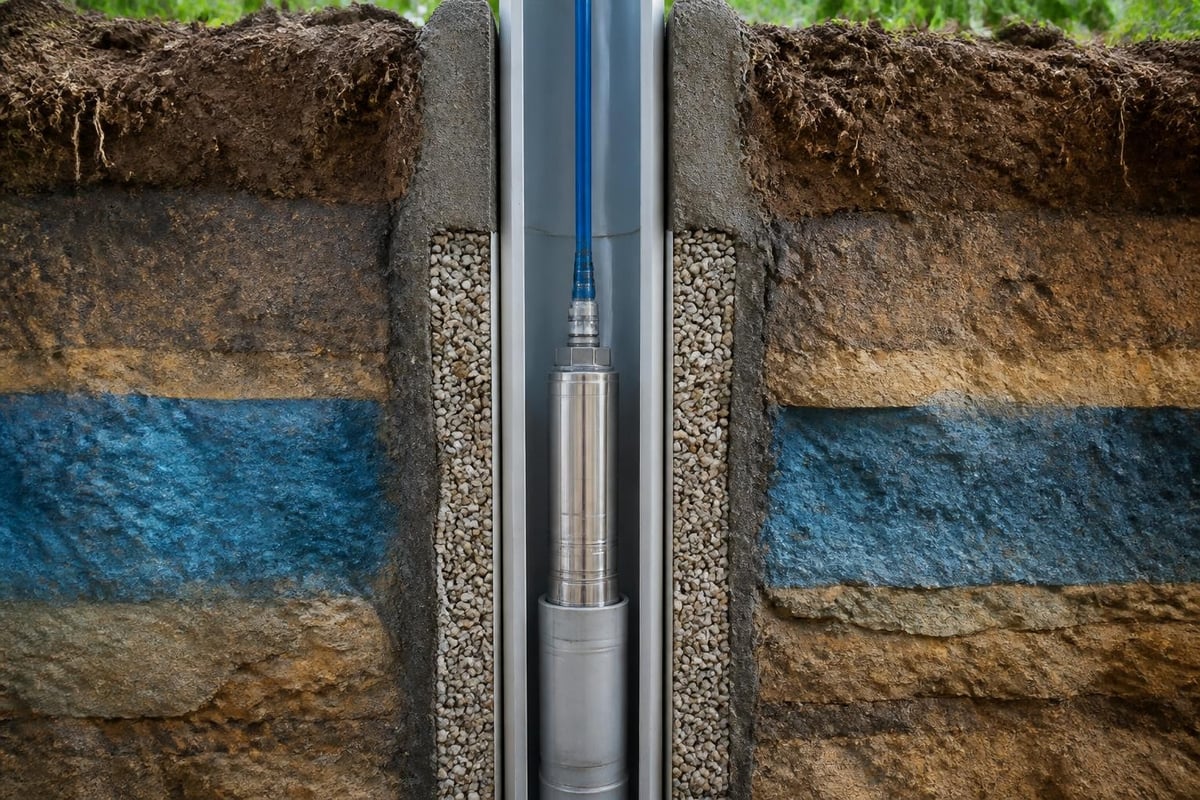
The WHO guidance on drinking-water quality for small supplies emphasizes the importance of proper construction standards to prevent contamination and ensure long-term water safety.
Site Selection and Hydrogeological Assessment
Choosing the optimal location for borehole drilling water extraction requires careful analysis of multiple factors. Geological conditions vary dramatically across regions, and what works in one location may fail completely 100 feet away.
Hydrogeological surveys employ several investigation methods:
- Desktop studies: Reviewing geological maps, existing borehole data, and aquifer characteristics
- Geophysical surveys: Using resistivity or seismic methods to identify water-bearing formations
- Trial boreholes: Drilling exploratory holes to confirm aquifer presence and productivity
- Pump testing: Assessing sustainable yield rates and aquifer recharge capacity
Critical Siting Considerations
| Factor | Minimum Distance | Reason |
|---|---|---|
| Septic systems | 50-100 feet | Prevent bacterial contamination |
| Fuel storage | 100 feet | Avoid chemical pollution |
| Property boundaries | 10-15 feet | Legal access and maintenance |
| Buildings | 10-20 feet | Drilling equipment clearance |
| Surface water | 50 feet | Reduce infiltration risk |
The UK Government guidance on groundwater risk assessments provides comprehensive frameworks for evaluating potential contamination sources and protecting borehole water quality through proper siting decisions.
Site selection must also consider practical factors including electrical power availability for pumps, access for drilling equipment (typically requiring 30-foot clearance), and topography that prevents surface water pooling near the borehole head.
Drilling Methods and Techniques
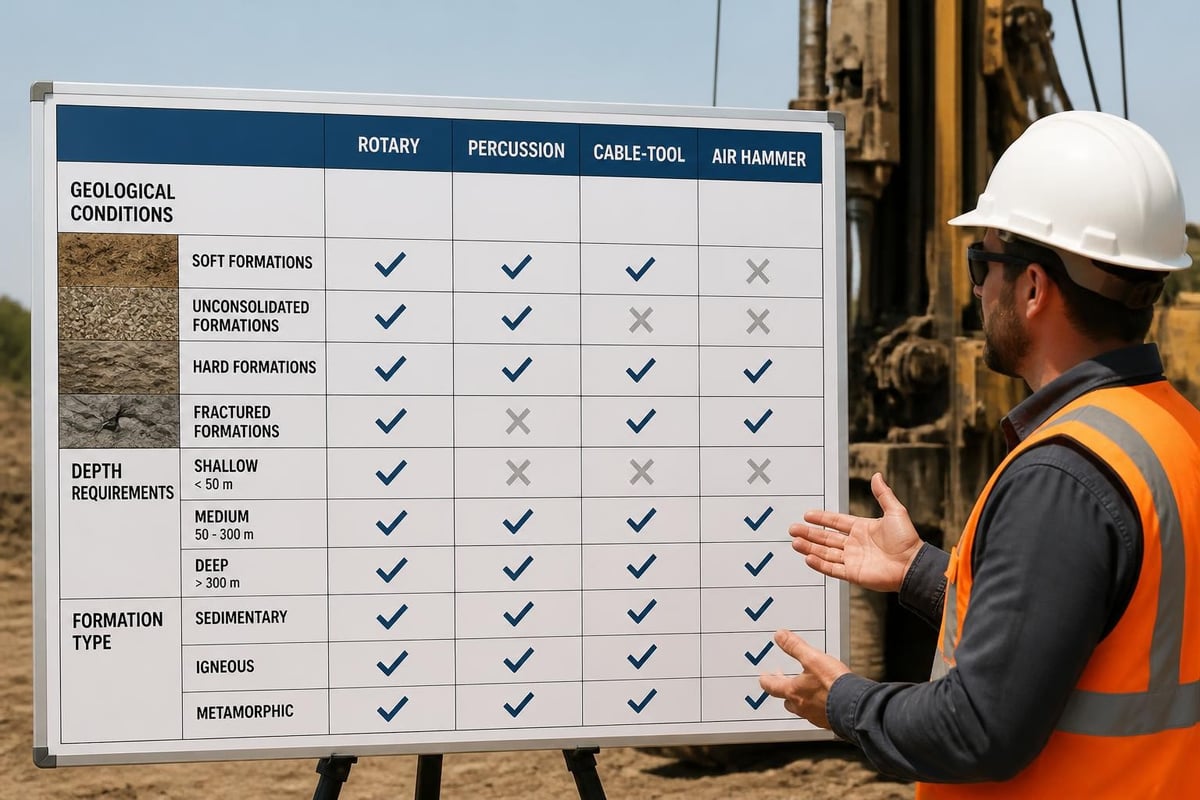
Borehole drilling water projects employ different drilling technologies depending on geological conditions, required depth, and project budget. Each method offers distinct advantages for specific applications.
Rotary Drilling
Rotary drilling represents the most common method for modern borehole installation. The drill bit rotates while hydraulic pressure forces it downward, cutting through formations and circulating drilling fluid (mud or air) to remove cuttings.
Direct rotary drilling uses bentonite mud that cools the bit, stabilizes the borehole walls, and carries rock fragments to the surface. Reverse rotary drilling reverses the fluid flow direction, making it effective for large-diameter boreholes in unconsolidated formations.
Percussion and Cable-Tool Drilling
Percussion drilling uses a heavy cutting tool repeatedly dropped into the borehole to break rock formations. The FAO technical guide on groundwater drilling methods explains how this traditional technique remains valuable for hard rock formations where rotary methods struggle.
Cable-tool drilling, though slower than modern alternatives, offers precision in difficult geological conditions and requires minimal water for operation.
Air Rotary and Down-The-Hole Hammer
Air rotary drilling uses compressed air instead of mud, making it ideal for consolidated rock formations. The down-the-hole (DTH) hammer method combines rotary motion with pneumatic percussion, delivering excellent penetration rates in hard rock while maintaining borehole stability.
Water Quality Testing and Treatment
Raw borehole drilling water requires comprehensive testing before consumption or use. Underground water chemistry varies based on the aquifer's geological composition, residence time, and surrounding land use activities.
Essential Water Quality Parameters
Laboratory analysis should evaluate these critical factors:
- Microbiological: Total coliform, E. coli, and fecal indicators
- Physical: pH, turbidity, color, odor, temperature
- Chemical: Nitrates, fluoride, arsenic, iron, manganese
- Heavy metals: Lead, cadmium, chromium, mercury
- Hardness: Calcium and magnesium concentrations
- Dissolved solids: Total dissolved solids (TDS) levels
The EPA’s private wells resource center recommends annual testing for total coliform bacteria and nitrates, with comprehensive analysis every three to five years or after any changes in water taste, odor, or appearance.
| Contaminant | Health Concern | Treatment Solution |
|---|---|---|
| Bacteria/viruses | Gastro diseases | UV disinfection, chlorination |
| Iron/manganese | Staining, taste | Oxidation, filtration |
| Hardness | Scale buildup | Water softeners |
| Nitrates | Methemoglobinemia | Reverse osmosis, ion exchange |
| Arsenic | Cancer, organ damage | Specialized filtration |
Professional water treatment systems integrate multiple technologies to address specific quality issues identified through testing. Point-of-entry systems treat all water entering the property, while point-of-use systems target specific outlets like drinking water taps.
Regulatory Compliance and Permitting
Borehole drilling water projects must navigate various regulatory requirements depending on jurisdiction and project scale. Compliance ensures environmental protection, prevents aquifer contamination, and maintains groundwater sustainability for all users.
Permitting Requirements
Most regions require permits before drilling commences. Applications typically include:
- Site plans: Showing borehole location relative to contamination sources
- Geological reports: Demonstrating aquifer availability and sustainability
- Construction specifications: Detailing casing, grouting, and completion methods
- Environmental assessments: Evaluating impacts on surrounding water resources
The British Geological Survey’s borehole drilling guidance outlines notification requirements and best practices for recording geological information during drilling operations.
Construction Standards and Borehole Completion
Proper borehole completion prevents contamination and ensures long-term functionality:
Casing installation must extend from surface to below the static water level, with sufficient overlap where sections join. Annular space between the casing and borehole wall receives cement grout from bottom to surface, creating an impermeable seal against surface water infiltration.
Sanitary seals at the wellhead prevent direct entry of contaminated surface water, insects, or debris. Professional installations include vermin-proof caps, concrete pads sloped away from the casing, and elevated headworks in flood-prone areas.
The USGS technical publication on well construction provides detailed specifications for monitoring well design that apply equally to water supply boreholes, emphasizing proper screen selection, filter pack design, and completion procedures.
Sustainable Yield and Aquifer Management
Determining sustainable extraction rates protects both your investment and the broader groundwater resource. Overpumping can lead to well failure, aquifer depletion, and impacts on neighboring water users.
Pump Testing Procedures
Professional borehole drilling water installations include comprehensive pump testing:
- Step-drawdown tests: Pumping at increasing rates to determine maximum sustainable yield
- Constant-rate tests: Running pumps at steady rates for 24-72 hours to assess aquifer response
- Recovery monitoring: Measuring how quickly water levels rebound after pumping stops
Test results reveal the specific capacity (yield per foot of drawdown) and help size pumping equipment appropriately. Conservative design typically targets 70-80% of maximum tested yield to ensure long-term sustainability.
Maintenance and Monitoring
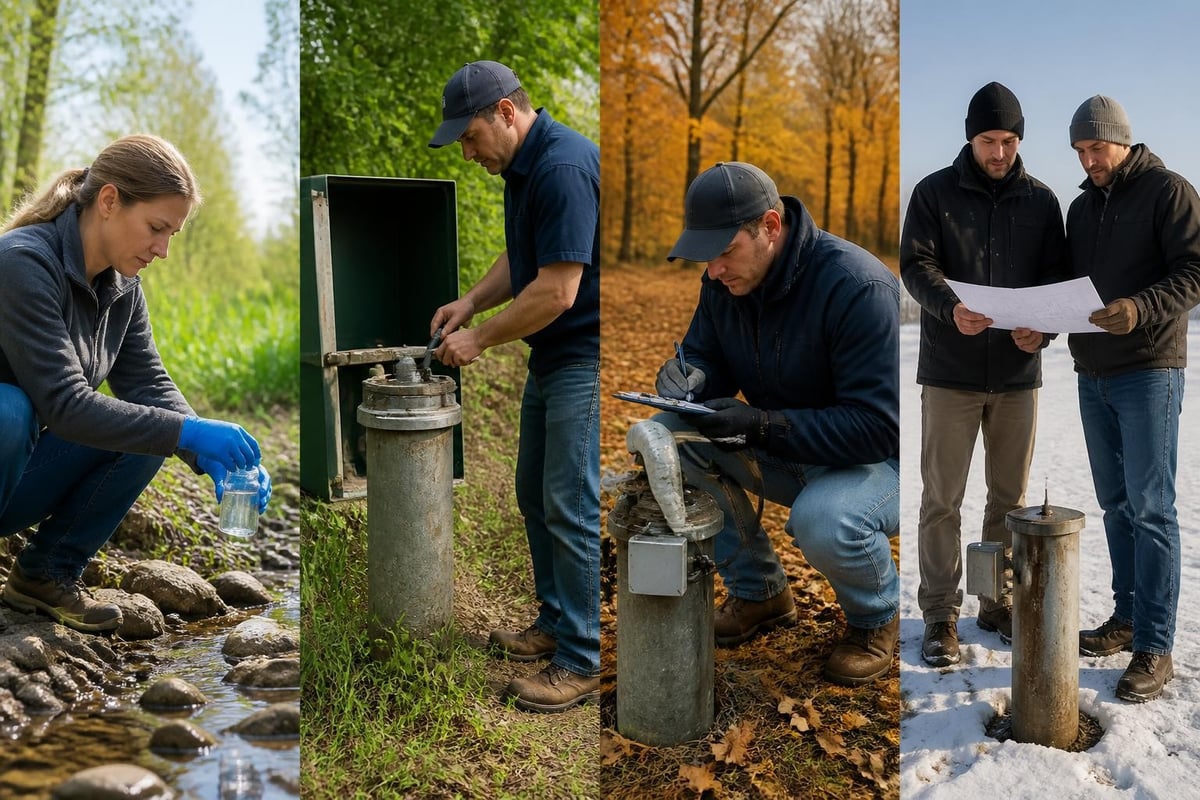
Regular maintenance extends borehole lifespan and maintains water quality:
- Annual water quality testing for key parameters
- Periodic inspection of wellhead seals and caps
- Pump performance monitoring (flow rates, power consumption)
- Bacterial treatment if coliform tests show contamination
- Professional rehabilitation when yields decline significantly
Well rehabilitation becomes necessary when mineral deposits, bacterial growth, or fine sediment reduce efficiency. Techniques include mechanical brushing, chemical treatment, high-pressure jetting, and air surging to restore aquifer connection and improve yields.
Cost Considerations and Return on Investment
Borehole drilling water systems represent significant upfront investment with compelling long-term economics. Project costs vary based on depth, geology, site accessibility, and regulatory requirements.
Typical Cost Components
| Expense Category | Cost Range | Variables |
|---|---|---|
| Site investigation | $1,500-$5,000 | Survey complexity, testing depth |
| Drilling | $15-$65 per foot | Method, geology, diameter |
| Casing and materials | $3,000-$8,000 | Depth, diameter, material quality |
| Pumping system | $2,500-$7,000 | Depth, capacity, automation level |
| Treatment equipment | $1,500-$10,000+ | Quality issues, flow requirements |
| Permitting/compliance | $500-$3,000 | Jurisdiction, project complexity |
A typical residential borehole drilling water system reaching 150-250 feet costs between $8,000 and $25,000 for complete installation. Commercial installations requiring higher yields or deeper drilling may exceed $50,000.
Economic Benefits
Investment recovery occurs through:
- Eliminated water bills: Savings of $50-$200+ monthly depending on consumption
- Property value increase: Wells can add $10,000-$30,000 to property valuations
- Agricultural productivity: Reliable irrigation independent of restrictions or costs
- Business continuity: Uninterrupted operations during municipal supply issues
- Hedge against inflation: Fixed extraction costs while utility rates rise annually
Most residential borehole drilling water installations achieve payback within 5-10 years, with systems frequently operating productively for 25-50 years when properly maintained.
Professional Installation vs. DIY Approaches
While some property owners consider self-drilling to reduce costs, borehole drilling water projects demand specialized expertise, equipment, and regulatory knowledge that make professional installation the prudent choice.
Professional drilling companies bring critical advantages:
- Licensed operators with geological and hydrogeological training
- Specialized drilling rigs capable of reaching productive aquifers
- Knowledge of local aquifer characteristics and success rates
- Compliance with all permitting and construction standards
- Liability insurance protecting property owners from drilling risks
- Performance guarantees and warranty coverage on installations
The Rural Water Supply Network’s professional drilling resources emphasize how proper training and supervision dramatically improve success rates and long-term performance.
DIY drilling attempts risk encountering hard rock formations that damage equipment, missing productive aquifers entirely, violating construction codes, creating contamination pathways, and voiding insurance coverage. The financial gamble rarely justifies the modest savings.
Selecting a Drilling Contractor
Evaluate potential contractors based on:
- Licensing and certification appropriate to your jurisdiction
- Insurance coverage including general liability and worker's compensation
- Experience with local geology and similar project types
- References from recent clients with completed projects
- Detailed quotations itemizing all costs and specifications
- Warranty terms covering drilling, installation, and initial yield
Request multiple competitive bids but recognize that the lowest price rarely delivers the best value. Quality installation from experienced contractors prevents costly failures and ensures decades of reliable service.
Future-Proofing Your Water Supply
As climate patterns shift and water demand increases, borehole drilling water systems provide resilience against supply uncertainties. Strategic planning ensures installations meet both current needs and future requirements.
Capacity Planning
Design systems with growth potential:
- Oversize casings allow future pump upgrades without redrilling
- Excess treatment capacity accommodates increased consumption
- Multiple use planning considers domestic, irrigation, and commercial needs
- Storage buffering provides supply during peak demand or maintenance
Smart monitoring technology now enables remote tracking of water levels, pump performance, flow rates, and quality parameters. These systems alert owners to developing issues before they cause failures, optimizing maintenance timing and extending equipment life.
Climate Adaptation Strategies
Groundwater resources demonstrate greater resilience to drought than surface supplies, but climate change still affects recharge rates and seasonal availability. Conservative extraction rates, rainwater harvesting integration, and efficiency measures protect long-term sustainability.
Dual-source systems combining borehole drilling water with municipal connections or rainwater collection provide ultimate security, allowing switching between sources based on quality, cost, or availability factors.
Securing reliable water through borehole drilling requires careful planning, professional execution, and ongoing stewardship to protect this valuable resource. From initial site assessment through drilling, completion, and long-term maintenance, every stage demands attention to technical standards and regulatory compliance. Terrabuilds Group combines drilling expertise with comprehensive water treatment solutions, delivering turnkey borehole installations engineered for performance, safety, and sustainability. Contact their team today to discuss how a professionally designed borehole water system can provide water security for your property's future.