The water industry represents one of the most critical sectors in global infrastructure, with water businesses serving communities, industries, and agricultural operations worldwide. As we navigate 2026, these enterprises face unprecedented challenges and opportunities, from aging infrastructure and regulatory changes to technological innovation and growing demand for clean water access. Understanding the landscape of water businesses requires insight into market dynamics, operational requirements, and the regulatory framework that shapes this essential industry.
The Expanding Landscape of Water Businesses
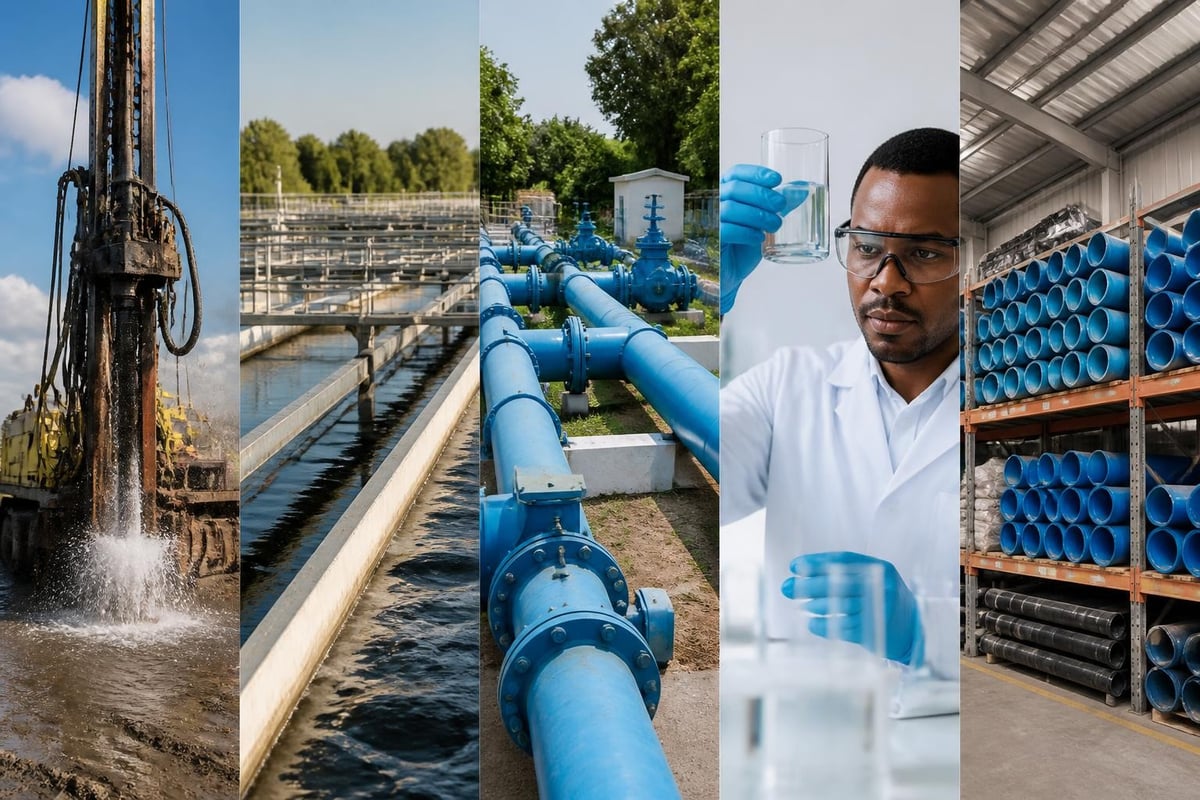
Water businesses encompass a diverse range of operations, each serving specific needs within the broader water management ecosystem. From drilling and extraction to treatment and distribution, these enterprises form the backbone of water security for millions of people.
Core Categories Within the Sector
The water industry includes several distinct business models, each with unique operational requirements and market opportunities:
- Water extraction and borehole drilling services that access groundwater sources
- Treatment and purification companies specializing in water quality improvement
- Distribution system operators managing infrastructure networks
- Testing and monitoring services ensuring compliance and safety
- Equipment manufacturing and supply for water treatment systems
- Consulting and engineering firms designing water solutions
These categories often overlap, with many water businesses offering integrated services that span multiple aspects of the water supply chain. Companies that can provide comprehensive solutions gain competitive advantages in an increasingly complex market.
Market Size and Growth Projections
The global water industry continues to expand as population growth, urbanization, and climate change increase demand for reliable water services. In 2026, water businesses operate in a market valued at hundreds of billions of dollars annually, with projections showing sustained growth through the next decade.
North American water businesses alone represent a significant portion of this market, driven by infrastructure replacement needs and stricter water quality standards. The American Water Works Association’s 2026 State of the Water Industry Report highlights key trends including workforce development challenges, cybersecurity concerns, and the ongoing need for capital investment in water infrastructure.
| Market Segment | 2026 Value | Growth Rate | Key Drivers |
|---|---|---|---|
| Water Treatment | $45B+ | 6.2% annually | Quality standards, contamination concerns |
| Drilling Services | $12B+ | 4.8% annually | Groundwater access, agricultural demand |
| Distribution Infrastructure | $85B+ | 5.1% annually | Aging systems, leak reduction |
| Testing & Monitoring | $8B+ | 7.3% annually | Regulatory compliance, technology adoption |
Regulatory Framework Shaping Water Businesses
Operating water businesses in 2026 requires navigating a complex regulatory environment designed to protect public health and environmental resources. Understanding these regulations is not optional but fundamental to business sustainability and legal compliance.
Federal Water Quality Standards
The regulatory landscape for water businesses centers on several key pieces of legislation. The Safe Drinking Water Act establishes the foundation for water quality protection, setting enforceable standards that water systems must meet. This legislation impacts water businesses at every level, from source protection to point-of-use treatment.
Water businesses must also understand the drinking water regulations that govern over 90 different contaminants. These regulations specify maximum contaminant levels, treatment techniques, and monitoring requirements that directly affect operational procedures and equipment investments.
State and Local Compliance Requirements
Beyond federal mandates, water businesses face varying state and local regulations that can significantly impact operations:
- Licensing and certification requirements for operators and technicians
- Permit processes for drilling, extraction, and discharge activities
- Water rights and allocation rules governing usage amounts
- Environmental impact assessments for new projects
- Reporting and documentation standards for water quality data
Companies operating across multiple jurisdictions must maintain compliance systems that account for these variations while ensuring consistent service quality. This complexity creates opportunities for water businesses that specialize in regulatory compliance consulting and documentation management.
Technology Innovation in Modern Water Businesses
The water sector is experiencing a technological transformation that is reshaping how water businesses operate, monitor, and deliver services. Companies that embrace these innovations position themselves for competitive advantage and operational efficiency.
Advanced Treatment Technologies
Modern water businesses increasingly deploy sophisticated treatment systems that address emerging contaminants and improve efficiency:
- Reverse osmosis systems providing high-purity water for various applications
- UV disinfection eliminating pathogens without chemical additives
- Advanced oxidation processes breaking down persistent organic compounds
- Membrane filtration removing particles and microorganisms
- Smart monitoring systems providing real-time water quality data
These technologies enable water businesses to meet increasingly stringent quality standards while reducing operational costs. The integration of automation and remote monitoring capabilities allows for more efficient resource allocation and faster response to water quality issues.

Digital Transformation and Data Analytics
Water businesses are leveraging digital tools to optimize operations and improve customer service. Geographic information systems (GIS) help drilling companies identify optimal borehole locations, while predictive analytics enable treatment facilities to anticipate maintenance needs before equipment failures occur.
The adoption of Internet of Things (IoT) sensors throughout water systems provides unprecedented visibility into performance metrics, leak detection, and consumption patterns. Water businesses that effectively utilize this data can identify efficiency opportunities, reduce waste, and demonstrate value to customers through measurable improvements.
Building Successful Water Businesses in 2026
Establishing and growing water businesses requires strategic planning, technical expertise, and a clear understanding of market needs. Success in this sector demands attention to multiple critical factors that differentiate thriving companies from struggling ones.
Essential Operational Capabilities
Water businesses must develop core competencies that support reliable service delivery:
Technical Expertise: Employing qualified professionals with relevant certifications and experience in water treatment, drilling, or distribution systems ensures quality outcomes and regulatory compliance. Ongoing training programs keep teams current with evolving technologies and standards.
Equipment Investment: Maintaining modern, well-maintained equipment is non-negotiable for water businesses. This includes drilling rigs, treatment systems, testing equipment, and service vehicles that represent significant capital investments but are essential for operational capability.
Quality Assurance Systems: Implementing robust quality control processes protects both customers and the business itself. Documentation systems, testing protocols, and standardized procedures create consistency and provide evidence of compliance during regulatory audits.
| Success Factor | Implementation Strategy | Business Impact |
|---|---|---|
| Technical Certification | Invest in employee training and credentials | Enhanced credibility, regulatory compliance |
| Equipment Modernization | Regular upgrades, preventive maintenance | Reduced downtime, improved efficiency |
| Quality Documentation | Standardized testing and reporting systems | Customer confidence, audit readiness |
| Customer Communication | Transparent reporting, responsive service | Client retention, referral generation |
Market Positioning and Differentiation
Water businesses face competition from established providers and new entrants. Successful differentiation strategies include:
- Specialization in specific water challenges such as industrial applications or specific contaminants
- Geographic focus serving underserved rural or developing areas
- Integrated service offerings combining multiple capabilities under one provider
- Premium positioning emphasizing superior quality and customer service
- Technology leadership adopting cutting-edge treatment and monitoring systems
Companies that clearly communicate their unique value proposition and consistently deliver on promises build reputations that drive sustainable growth through referrals and repeat business.
Challenges Facing Water Businesses Today
Despite strong market fundamentals, water businesses navigate significant obstacles that require strategic responses and adaptive management. Understanding these challenges enables companies to develop mitigation strategies and identify emerging opportunities.
Infrastructure and Capital Requirements
Water businesses operate in a capital-intensive industry where equipment, vehicles, and facilities represent substantial investments. Drilling operations require specialized rigs costing hundreds of thousands of dollars, while treatment facilities need ongoing upgrades to meet evolving standards.
The Black & Veatch 2026 Water Report identifies infrastructure funding as a persistent challenge, with many water systems struggling to secure capital for necessary improvements. Water businesses that develop flexible financing options or partner with funding sources can overcome this barrier and access projects that competitors cannot support.
Workforce Development and Retention
Finding and retaining qualified technical personnel represents an ongoing challenge for water businesses. The industry requires specialized knowledge in areas like hydrogeology, water chemistry, and treatment system operation, yet faces competition from other sectors for skilled workers.
Successful water businesses invest in apprenticeship programs, competitive compensation packages, and career development pathways that attract new talent while retaining experienced professionals. Creating positive workplace cultures and offering opportunities for advancement reduces turnover costs and builds institutional knowledge.
Environmental and Regulatory Pressures
Water businesses must adapt to increasingly stringent environmental regulations and growing public awareness of water quality issues. Emerging contaminants like PFAS chemicals require new treatment approaches, while climate change impacts create uncertainty around water availability and quality.
Staying ahead of regulatory changes through active industry participation and proactive compliance investments positions water businesses as leaders rather than followers. Companies that anticipate future requirements and implement solutions early gain competitive advantages while avoiding costly reactive measures.

Service Delivery Models for Water Businesses
Water businesses employ various service delivery approaches depending on customer needs, market conditions, and company capabilities. Understanding these models helps businesses select strategies aligned with their strengths and market opportunities.
Project-Based Services
Many water businesses operate on a project basis, particularly those focused on borehole drilling, system installation, or infrastructure construction. This model involves:
- Initial consultation and site assessment to determine customer needs
- Proposal development outlining scope, timeline, and costs
- Project execution with defined milestones and deliverables
- Testing and commissioning to ensure system performance
- Final documentation and handover with operating instructions
Project-based work provides clear revenue recognition and defined endpoints but requires consistent business development to maintain pipeline continuity. Successful companies in this space develop efficient project management systems that deliver predictable outcomes within budget and schedule constraints.
Ongoing Service Contracts
Water businesses also provide recurring services through maintenance agreements, monitoring contracts, or operational management arrangements. This model offers several advantages:
- Predictable revenue streams supporting financial planning and stability
- Deeper customer relationships building loyalty and referral opportunities
- Proactive maintenance opportunities preventing costly emergency repairs
- Data collection over time informing system optimization recommendations
- Lower customer acquisition costs compared to one-time project sales
Service contracts work particularly well for water treatment systems requiring regular filter changes, water quality testing, or equipment servicing. Water businesses can package these offerings at different tiers, creating entry-level options alongside premium comprehensive maintenance plans.
Strategic Growth Opportunities for Water Businesses
The evolving water landscape creates multiple pathways for business expansion and diversification. Water businesses that identify and capitalize on these opportunities position themselves for sustained growth and market leadership.
Emerging Market Segments
Several market segments show particularly strong growth potential in 2026 and beyond:
Industrial Water Treatment: Manufacturing facilities, food processing plants, and energy operations require specialized water treatment solutions. Water businesses serving these customers often command premium pricing due to technical complexity and regulatory requirements.
Agricultural Water Management: Farm operations need reliable water access for irrigation, livestock, and processing. Drilling companies and treatment providers can develop specialized offerings for agricultural customers facing water scarcity or quality challenges.
Residential Water Quality: Growing consumer awareness of water contaminants drives demand for whole-house treatment systems, point-of-use filters, and water testing services. Water businesses can capture this market through direct sales or partnerships with home builders and real estate developers.
Geographic Expansion Strategies
Water businesses often start in limited geographic areas but can expand through several approaches:
- Organic growth into adjacent territories leveraging existing capabilities
- Acquisition of competitors or complementary businesses accelerating market entry
- Franchise or licensing models enabling rapid expansion with lower capital requirements
- Strategic partnerships with local providers sharing market access
- Mobile service capabilities serving wider areas from centralized bases
Each expansion approach carries different risks and resource requirements. Successful water businesses carefully evaluate market opportunities against their operational capabilities and financial capacity before committing to geographic growth.
Quality Standards and Best Practices
Water businesses must maintain rigorous quality standards to protect public health, meet regulatory requirements, and build customer trust. Implementing industry best practices differentiates professional operations from inadequate providers.
Testing and Monitoring Protocols
Comprehensive testing programs form the foundation of quality assurance for water businesses. These protocols should include:
| Testing Type | Frequency | Parameters | Purpose |
|---|---|---|---|
| Source Water Analysis | Before system design | Physical, chemical, biological | Determine treatment requirements |
| Installation Verification | Post-installation | Flow rates, pressure, initial quality | Confirm system performance |
| Routine Monitoring | Per service agreement | Key contaminants, system metrics | Ensure ongoing compliance |
| Annual Comprehensive | Yearly minimum | Full contaminant panel | Detect emerging issues |
Water businesses should utilize certified laboratories for testing and maintain detailed records demonstrating compliance with applicable standards. This documentation proves invaluable during regulatory inspections and provides evidence of due diligence if water quality issues arise.
Customer Education and Communication
Successful water businesses recognize that customer understanding drives satisfaction and referrals. Effective communication strategies include:
- Clear explanation of water quality results using accessible language
- Regular reporting on system performance and maintenance activities
- Proactive notification of potential issues before they become problems
- Educational resources helping customers understand water quality concepts
- Responsive customer service addressing questions and concerns promptly
Transparency builds trust and positions water businesses as partners in water quality rather than mere service providers. Companies that invest in customer education often see higher retention rates and more enthusiastic referrals.
Financial Management for Water Businesses
Sound financial practices enable water businesses to invest in growth, weather economic uncertainties, and build long-term value. The capital-intensive nature of this industry makes financial discipline particularly important.
Pricing Strategies and Profitability
Water businesses must price services to cover costs while remaining competitive and delivering value to customers. Effective pricing considers:
Cost Analysis: Accurately tracking direct costs (labor, materials, equipment depreciation) and indirect expenses (overhead, insurance, permitting) ensures pricing covers full operational expenses. Many water businesses underprice services by failing to account for all costs.
Value-Based Pricing: Rather than competing solely on price, successful water businesses articulate the value they deliver through superior quality, reliability, or customer service. This positioning supports premium pricing that reflects true value creation.
Market Positioning: Understanding competitor pricing helps water businesses position offerings appropriately. However, the lowest price rarely builds sustainable businesses in this quality-critical industry.
Cash Flow Management
Water businesses often face timing mismatches between expenses and revenue, particularly for project-based work. Effective cash flow management strategies include:
- Milestone-based payment terms receiving deposits and progress payments
- Clear payment policies with defined terms and follow-up procedures
- Adequate working capital reserves covering operational gaps
- Credit management assessing customer creditworthiness before large projects
- Expense timing aligning major purchases with revenue cycles
Companies that maintain positive cash flow can invest in growth opportunities, negotiate better supplier terms, and avoid expensive short-term financing.
Sustainability and Environmental Responsibility
Water businesses occupy a unique position at the intersection of environmental protection and essential service delivery. Embracing sustainability principles aligns with regulatory trends while meeting growing customer expectations for environmental responsibility.
Water Conservation Practices
Water businesses can demonstrate environmental leadership through operational choices:
Efficient System Design: Recommending appropriately sized systems avoids over-extraction and unnecessary treatment capacity. Right-sizing saves customers money while reducing environmental impact.
Leak Detection and Prevention: Proactively identifying and repairing leaks in distribution systems conserves water resources and reduces energy consumption for pumping and treatment.
Technology Selection: Choosing energy-efficient pumps, treatment systems, and monitoring equipment minimizes operational environmental footprints while often reducing operating costs.
Responsible Resource Management
Water businesses handle materials and dispose of waste products that require careful management:
- Proper handling of treatment chemicals preventing environmental contamination
- Disposal of filter media and treatment residuals following regulatory requirements
- Equipment recycling and refurbishment extending useful life and reducing waste
- Drilling waste management containing and disposing of drill cuttings appropriately
- Energy efficiency in vehicles, facilities, and equipment operation
Companies that embrace environmental responsibility as core values often find this commitment resonates with customers and employees, creating competitive differentiation beyond mere compliance.
Water businesses in 2026 operate in a dynamic environment offering significant opportunities for companies that combine technical expertise, regulatory knowledge, and customer focus. Success requires ongoing adaptation to emerging challenges, investment in technology and workforce development, and unwavering commitment to water quality standards. Whether you need borehole drilling, water treatment system installation, or comprehensive water quality solutions, Terrabuilds Group delivers the premium engineering expertise and customer service excellence that ensures reliable, safe water access for your home, business, or community project.