Water storage tanks serve as critical infrastructure for homes, businesses, and communities worldwide, but stored water quality can deteriorate rapidly without proper filtration. Tank water filter systems have become essential components for anyone relying on rainwater harvesting, borehole water, or municipal supply storage. These systems protect against sediment, biological contaminants, chemical pollutants, and physical debris that can compromise water safety. Understanding the components, technologies, and maintenance requirements of tank water filter systems ensures your water remains safe, clean, and compliant with health standards throughout 2026 and beyond.
Understanding Tank Water Filter System Components
Modern tank water filter systems consist of multiple stages working in concert to address different contamination risks. The configuration depends on source water quality, storage duration, intended use, and regulatory requirements.
Pre-Tank Filtration Elements
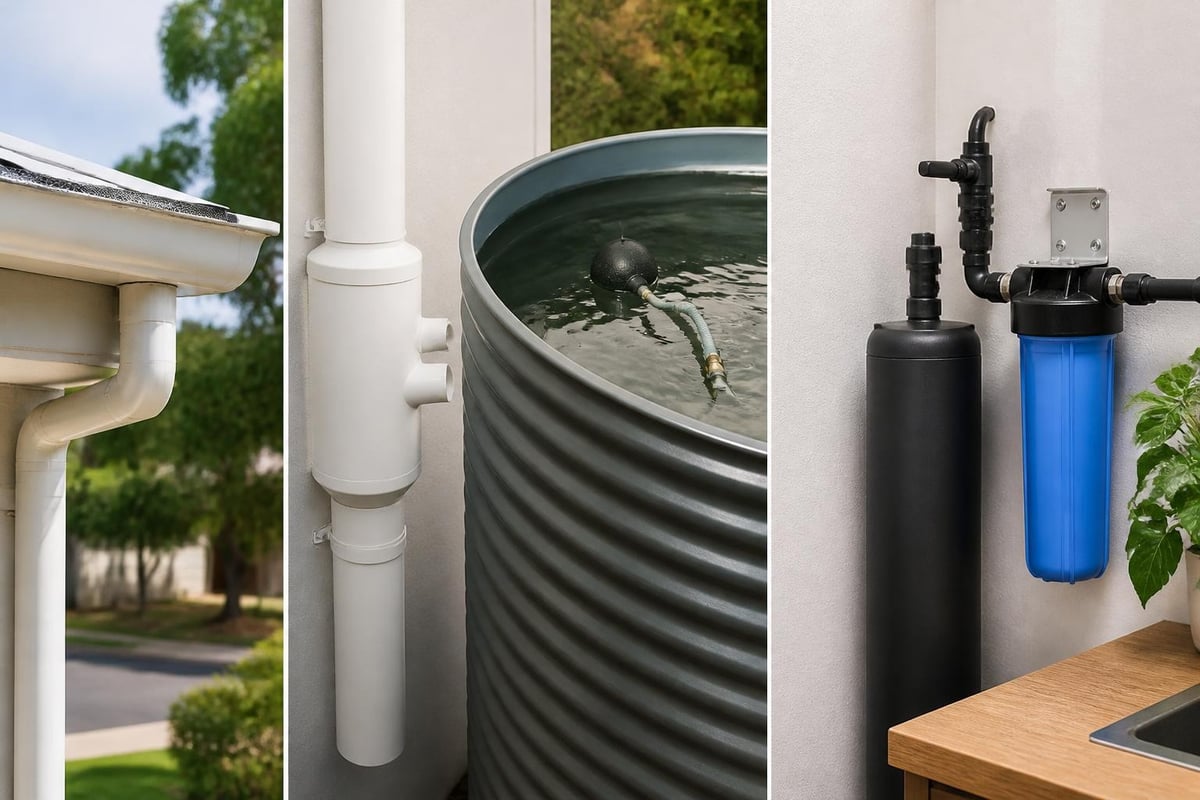
The first line of defense occurs before water enters your storage tank. First-flush diverters automatically waste the initial roof runoff in rainwater systems, which carries the highest concentration of dust, bird droppings, and atmospheric pollutants. These devices typically divert the first 20-40 liters per 100 square meters of collection area.
Leaf guards and gutter screens prevent larger debris from entering downpipes, while mesh filters (typically 1-5mm) installed at tank inlets catch finer particles. The WHO’s guidance on rainwater collection and storage emphasizes these pre-tank barriers as critical for reducing maintenance burden and protecting water quality.
Key pre-tank components include:
- Gutter guards and leaf screens
- First-flush diverters with automatic reset
- Inlet strainers (1-5mm mesh)
- Calming inlets to prevent sediment disturbance
- Overflow screens to prevent vermin entry
In-Tank Filtration Technology
Within the storage tank itself, several mechanisms continue the purification process. Floating intake systems draw water from approximately 15-30 centimeters below the surface, where water quality is typically highest. This zone avoids both surface contamination and settled sediment at the tank bottom.
Some advanced tank water filter systems incorporate UV sterilization units directly in recirculation loops. These continuously treat stored water, preventing bacterial growth during extended storage periods. Sediment naturally settles in properly designed tanks with adequate retention time, creating a natural clarification process.
| In-Tank Component | Function | Typical Specification |
|---|---|---|
| Floating intake | Draws cleanest water layer | 15-30 cm below surface |
| Tank overflow | Prevents contamination backflow | Screened, trapped outlet |
| Inspection access | Maintenance and cleaning | Sealed, lockable cover |
| Sediment sump | Collects settled particles | 10-15% of tank volume |
Post-Tank Treatment Systems
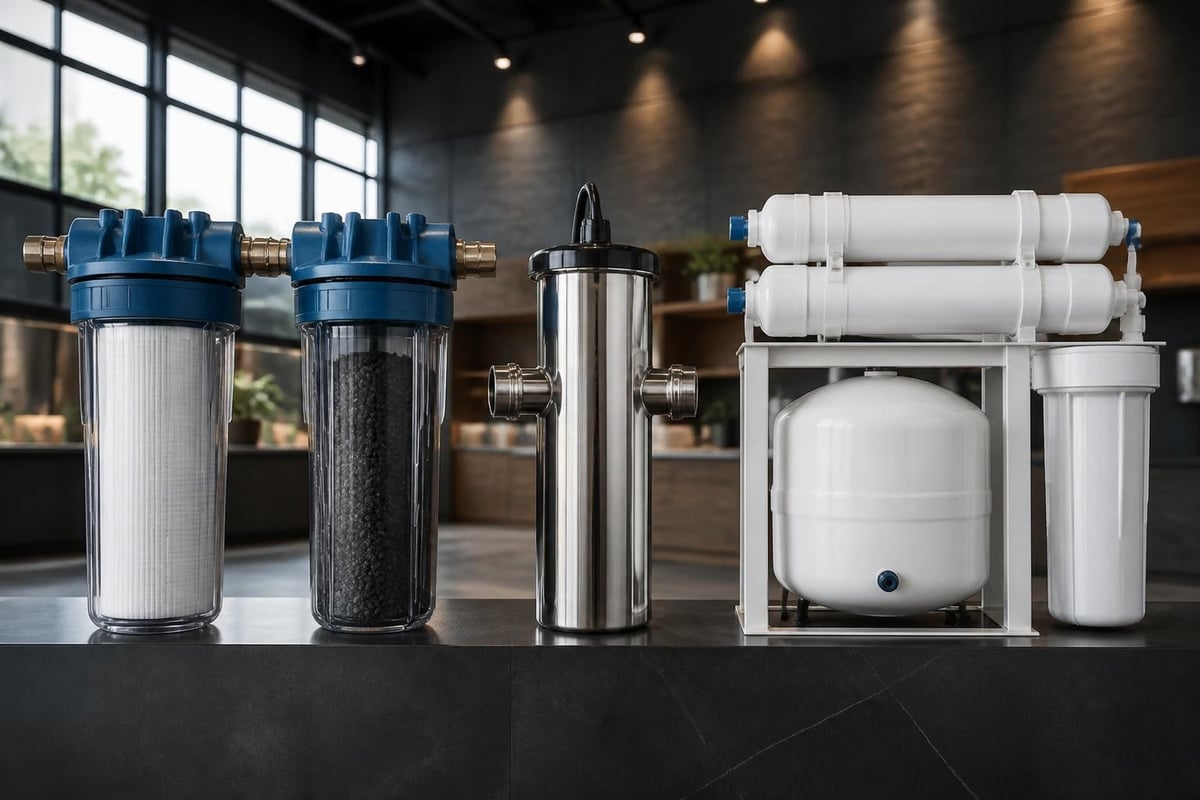
Water leaving the tank typically passes through additional filtration before reaching taps. Multi-stage filter housings allow customization based on specific water quality challenges. A standard configuration includes sediment filtration (5-20 microns), activated carbon for taste and odor removal, and final polishing filters (1 micron or finer).
Point-of-use versus whole-system filtration represents an important design choice. Whole-system filters treat all water leaving the tank, protecting appliances and providing consistent quality throughout the property. Point-of-use systems focus treatment at specific taps, reducing filter replacement costs but leaving other outlets unprotected.
UV disinfection units have become standard in tank water filter systems for properties without municipal chlorination. These units neutralize bacteria, viruses, and protozoa without adding chemicals, preserving the natural taste that rainwater and borehole users value.
Selecting the Right Filtration Technology
Choosing appropriate filtration technology requires careful analysis of source water characteristics, contamination risks, and end-use requirements. Tank water filter systems must address both current quality and potential future changes.
Matching Filters to Contaminants
Different filtration technologies target specific contaminant categories. Sediment filters use mechanical straining to remove particles, with micron ratings determining the smallest particles captured. Graduated filtration-starting with coarser filters and progressing to finer ones-extends filter life and improves efficiency.
Activated carbon filters excel at removing chlorine, volatile organic compounds, taste and odor issues, and some pesticides. However, they require regular replacement as adsorption capacity becomes exhausted. Carbon block filters provide superior performance compared to granular activated carbon for most applications.
Advanced oxidation and specialized media address specific challenges:
- Iron and manganese filters use oxidation and precipitation
- Arsenic removal media through selective adsorption
- Nitrate reduction via ion exchange
- Fluoride removal using activated alumina or reverse osmosis
- Heavy metal filtration through specialized resins
Water testing determines which technologies your tank water filter systems require. The EPA’s drinking water regulations establish maximum contaminant levels that guide filter selection and confirm treatment effectiveness.
UV Sterilization Requirements
UV treatment has become increasingly popular in tank water filter systems, particularly where biological contamination poses risks. UV lamps emit light at 254 nanometers, the wavelength most effective at disrupting microbial DNA.
Proper UV system sizing depends on flow rate and UV transmittance of the water. Turbidity, iron, and tannins absorb UV light, reducing effectiveness. Pre-filtration to below 5 NTU (nephelometric turbidity units) ensures adequate UV penetration. Systems should deliver a minimum dose of 40 mJ/cm² for general disinfection, with higher doses for specific pathogens.
| UV System Factor | Specification | Impact on Performance |
|---|---|---|
| Lamp intensity | 30,000+ μW/cm² | Determines pathogen kill rate |
| Pre-filtration | <5 NTU, <0.3 ppm iron | Ensures UV penetration |
| Flow rate | Matches dose requirement | Higher flow reduces contact time |
| Maintenance | Annual lamp replacement | UV output declines 20-30% yearly |
Reverse Osmosis Considerations
While comprehensive, reverse osmosis (RO) represents the most aggressive filtration option. RO systems remove 95-99% of dissolved solids, producing highly purified water but also generating significant waste water (typically 3-4 liters rejected per liter produced).
For tank water filter systems, RO suits specific scenarios: high salinity borehole water, confirmed heavy metal contamination, or medical/laboratory applications requiring ultra-pure water. Most residential applications achieve adequate safety with less intensive treatment, reserving RO for drinking water taps only.
Installation Best Practices for Tank Water Filter Systems
Proper installation determines long-term performance, maintenance requirements, and system lifespan. Tank water filter systems require careful planning for accessibility, pressure management, and compliance with local codes.
Pre-Installation Planning
System mapping begins with identifying all water sources, storage tanks, and usage points. Flow rate calculations ensure filters can meet peak demand without excessive pressure drop. A typical household requires 15-25 liters per minute at fixtures, while irrigation systems may demand 40+ liters per minute.
Pressure considerations influence component selection. Gravity-fed systems operate at 0.1-0.5 bar, requiring low-restriction filters and potentially booster pumps. Pressurized tanks deliver 2-4 bar, supporting standard filter housings and UV units. Pressure gauges installed before and after filter banks allow monitoring of pressure drop, indicating when replacement is needed.
The installation sequence typically follows this order:
- Tank outlet with floating intake or dedicated sediment zone draw-off
- Pressure tank or pump (if required)
- Coarse sediment filter (20-50 microns)
- Medium sediment filter (5-10 microns)
- Activated carbon filter
- UV sterilization unit
- Fine polishing filter (1-5 microns)
- Distribution to fixtures
Physical Installation Requirements
Filter housings require adequate clearance for cartridge replacement-typically 45-60 centimeters below the housing. Mounting filters on a dedicated board or frame simplifies maintenance and prevents strain on plumbing connections.
Bypass valves around filter banks allow system operation during maintenance, though unfiltered water should be restricted to non-potable uses. Isolation valves before and after each filter enable individual component servicing without shutting down the entire system.
UV units must be installed vertically or horizontally per manufacturer specifications, always after sediment filtration. The quartz sleeve protecting the UV lamp requires cleaning every 3-6 months, necessitating accessible installation with adequate working space.
Drainage provisions handle filter changes and system flushing. A floor drain or collection bucket area prevents water damage during maintenance. Some installers incorporate automatic shut-off valves that trigger when filter housings are opened.
Electrical and Control Systems
Tank water filter systems increasingly incorporate automation and monitoring. Pressure switches activate pumps when taps open and shut them off when flow stops. Flow sensors can track water usage and trigger alerts when consumption patterns suggest leaks.
Advanced systems monitor filter lifespan based on volume processed rather than just time elapsed. UV intensity sensors confirm adequate sterilization and alert when lamp replacement is needed. Some tank water filter systems integrate with home automation platforms, providing smartphone notifications and usage analytics.
Electrical installations must comply with local codes, particularly for outdoor or damp locations. Ground fault circuit interrupters (GFCI) protect UV units and pumps from electrical hazards. Emergency shut-off switches should be clearly labeled and easily accessible.
Maintenance Protocols and Schedules
Consistent maintenance preserves water quality, extends component life, and prevents costly system failures. Tank water filter systems require both routine servicing and periodic deep cleaning.
Filter Replacement Guidelines
Manufacturer specifications provide baseline replacement intervals, but actual service life varies with water quality and usage volume. Pressure differential monitoring offers the most accurate replacement indicator-when pressure drop across a filter exceeds 0.7-1.0 bar, replacement is necessary regardless of elapsed time.
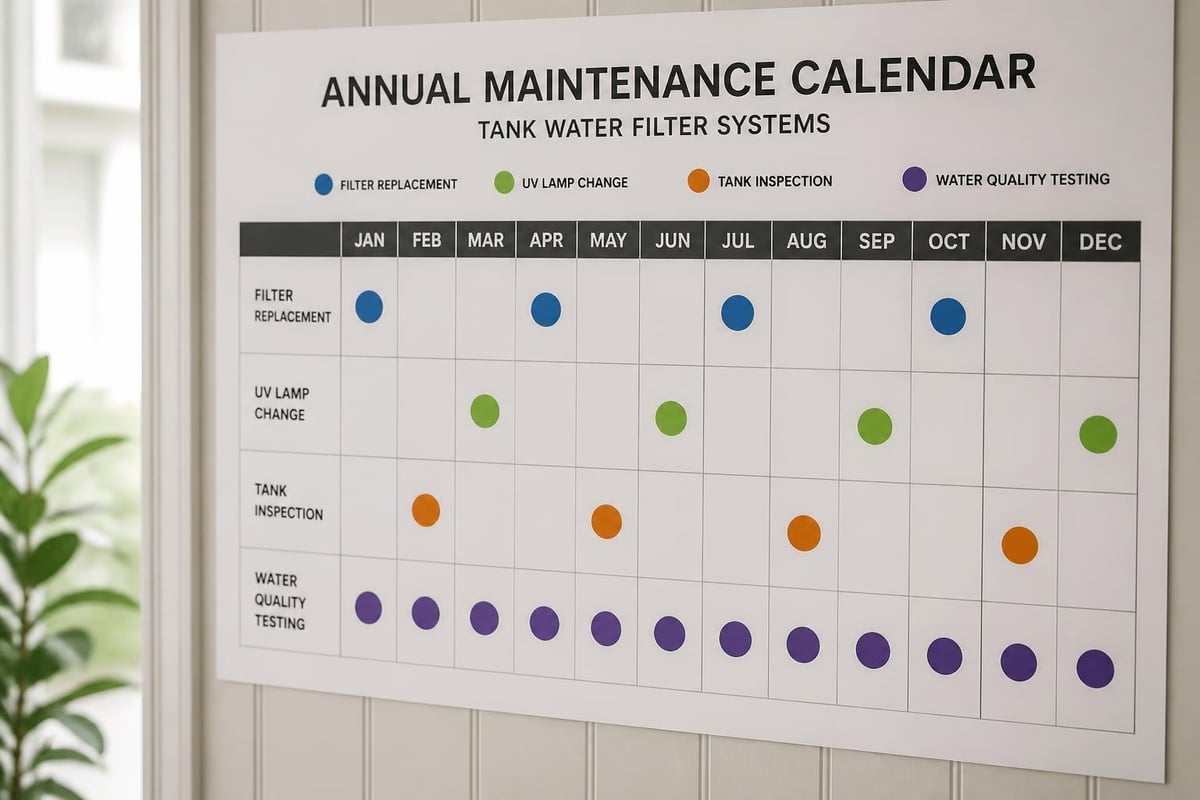
Standard replacement schedules for typical residential systems:
- Sediment pre-filters: Every 3-6 months
- Carbon block filters: Every 6-12 months
- Polishing filters: Every 12-18 months
- UV lamps: Annually (or per manufacturer specification)
- UV quartz sleeves: Clean quarterly, replace every 2-3 years
- Specialized media: Per manufacturer guidelines (often 3-5 years)
Water testing before and after filter banks confirms treatment effectiveness. Coliform bacteria testing should occur at least twice yearly for systems without municipal backup. The Guidelines for Drinking-Water Quality provide comprehensive testing protocols and acceptable limits for various parameters.
Tank Cleaning and Inspection
Storage tanks require periodic inspection and cleaning, even with excellent pre-filtration. Annual inspections should examine:
- Interior walls for algae growth or biofilm
- Sediment accumulation in tank bottom
- Integrity of screens and overflows
- Condition of floating intakes
- Structural issues (cracks, corrosion, leaks)
- Security of covers and access points
Full tank cleaning typically occurs every 3-5 years, or sooner if inspection reveals significant contamination. The process involves draining the tank, removing sediment, scrubbing interior surfaces, disinfecting with appropriate solutions (typically calcium hypochlorite or hydrogen peroxide), thorough rinsing, and refilling.
System Sanitization Procedures
Following extended periods of non-use, tank repairs, or confirmed contamination events, system sanitization becomes necessary. Chlorination remains the most common method, introducing calcium hypochlorite or sodium hypochlorite to achieve 50-100 ppm free chlorine throughout the system.
The sanitization process includes:
- Bypass or remove filters (chlorine damages carbon and some membranes)
- Add calculated chlorine dose to tank
- Circulate or allow contact time (minimum 24 hours)
- Open all fixtures until chlorine odor is detected
- Maintain chlorine residual for specified contact period
- Flush system thoroughly until no chlorine is detected
- Test for residual chlorine and bacteria
- Replace filters and resume normal operation
Alternative sanitization methods include hydrogen peroxide (less effective but filter-safe) and UV recirculation (for ongoing maintenance rather than shock treatment).
Health and Safety Compliance
Tank water filter systems must meet regulatory standards and protect public health. Understanding compliance requirements ensures legal operation and demonstrates due diligence in water safety management.
Regulatory Framework
In the United States, the EPA’s drinking water regulations establish enforceable standards for public water systems, while private systems typically follow state and local codes. Many jurisdictions have adopted provisions from EPA guidance even for private installations.
Key regulatory considerations include:
- Maximum contaminant levels for regulated substances
- Treatment technique requirements for specific contaminants
- Monitoring and reporting obligations (primarily public systems)
- Cross-connection control to prevent contamination
- Qualified operator requirements for certain system types
- Design and construction standards for tanks and treatment
Water quality parameters regulated for public systems provide useful benchmarks for private tank water filter systems. Even when not legally required, testing for coliform bacteria, nitrates, pH, turbidity, and total dissolved solids helps ensure safety.
Risk Assessment and Management
Effective water safety requires systematic risk assessment. The WHO’s advice on rainwater collection and storage management provides frameworks for identifying hazards and implementing control measures.
Common risk factors in tank water filter systems include:
| Risk Category | Potential Hazards | Control Measures |
|---|---|---|
| Source contamination | Animal feces, atmospheric pollution | First-flush diversion, regular gutter cleaning |
| Storage issues | Algae growth, vermin access | Light exclusion, secure screens and covers |
| Treatment failure | UV lamp degradation, filter exhaustion | Monitoring systems, scheduled replacement |
| Distribution problems | Biofilm, dead legs | Proper sizing, regular flushing |
| Maintenance gaps | Delayed servicing, inadequate cleaning | Written schedules, professional servicing contracts |
Water Safety Plans adapted from WHO guidance help systematize risk management. These plans document water sources, identify hazards, establish control measures, define monitoring procedures, and specify corrective actions when issues arise.
User Education and Communication
For systems serving multiple users-such as apartment buildings, schools, or commercial facilities-clear communication about water source and quality builds confidence and ensures appropriate use. Signage distinguishing potable from non-potable outlets prevents misuse.
Users should understand basic warning signs of water quality issues: unusual taste, odor, color, or turbidity. Reporting protocols enable rapid response to potential contamination events. Documentation of maintenance activities, water testing results, and system modifications creates accountability and supports troubleshooting.
Optimizing Performance and Efficiency
Advanced tank water filter systems incorporate technologies and strategies that improve reliability, reduce operating costs, and enhance water quality beyond baseline safety requirements.
Smart Monitoring Technologies
Internet-connected sensors and controllers bring tank water filter systems into the modern smart home ecosystem. Real-time monitoring tracks:
- Filter pressure differentials
- UV lamp intensity
- Flow rates and usage patterns
- Tank water levels
- Water quality parameters (pH, TDS, turbidity)
- Pump operation and energy consumption
Cloud-based platforms aggregate data over time, identifying trends that predict maintenance needs before failures occur. Machine learning algorithms can detect anomalies suggesting leaks, unusual consumption, or treatment breakthrough.
Some systems incorporate automatic shut-off valves that close when contamination sensors detect quality excursions. While adding complexity, these safety interlocks provide peace of mind for vulnerable populations or critical applications.
Energy Efficiency Considerations
Pumps and UV systems represent the primary energy consumers in tank water filter systems. Variable frequency drives (VFDs) on pumps adjust motor speed to match demand, reducing energy consumption by 20-40% compared to fixed-speed pumps with pressure switches.
Solar-powered systems suit remote locations or sustainability-focused installations. Modern solar pumps and 12-volt DC UV systems operate efficiently from battery banks charged by photovoltaic panels. Proper sizing ensures adequate capacity during cloudy periods while avoiding oversized, expensive arrays.
LED UV lamps, while still emerging in residential applications, consume approximately 40% less energy than traditional mercury vapor lamps while providing comparable disinfection. Their longer lifespan (up to 16,000 hours versus 9,000 for traditional lamps) reduces maintenance frequency.
Water Conservation Integration
Tank water filter systems often serve properties committed to water conservation. Integration with greywater systems, rainwater harvesting, and drought-resistant landscaping creates comprehensive water management strategies.
Dual-plumbing approaches reserve highly treated water for potable uses while directing lesser-treated tank water to toilet flushing, irrigation, and other non-potable applications. This tiered approach reduces filter replacement frequency and extends system capacity.
Leak detection integration prevents waste of both water and treatment capacity. Smart meters can identify leaks within hours rather than waiting for monthly billing statements. Given the investment in collection and treatment infrastructure, leak prevention delivers substantial return.
Emerging Trends and Future Developments
The tank water filter systems industry continues evolving, with innovations addressing performance, sustainability, and user experience challenges identified in existing installations.
Advanced Filtration Materials
Nanotechnology-enhanced filters capture contaminants at molecular scales previously requiring reverse osmosis. Nanofiber membranes achieve virus and bacteria removal while maintaining higher flow rates and lower pressure drops than conventional microfiltration.
Antimicrobial filter media incorporating silver, copper, or specialized polymers inhibit bacterial growth within filter cartridges. This prevents the paradoxical situation where filters become contamination sources as they age.
Specialized adsorbents target emerging contaminants of concern-pharmaceuticals, personal care products, PFAS (per- and polyfluoroalkyl substances), and microplastics. As these contaminants receive regulatory attention, tank water filter systems will increasingly incorporate removal technologies.
Modular and Scalable Designs
Modern tank water filter systems embrace modularity, allowing capacity expansion or technology upgrades without replacing entire installations. Cartridge standardization across manufacturers improves availability and reduces costs through competition.
Pre-engineered skid-mounted systems simplify installation for commercial and multi-unit residential applications. These factory-assembled units arrive ready for connection, reducing installation time and ensuring quality control superior to field-built systems.
Containerized treatment systems serve temporary needs (construction sites, events) or disaster response scenarios. Mobile tank water filter systems can be deployed rapidly wherever water storage exists but treatment infrastructure is damaged or inadequate.
Regulatory Evolution
Water quality regulations continue tightening globally. Recent additions to contaminant lists include PFAS, lead (with lowered action levels), and certain microbial pathogens. Tank water filter systems must adapt to these changing requirements.
Third-party certification programs help navigate the complex landscape of filter performance claims. NSF/ANSI standards provide independent verification that products remove contaminants as advertised. Look for certifications relevant to specific concerns: NSF/ANSI 53 for health contaminants, NSF/ANSI 42 for aesthetic issues, and NSF/ANSI 55 for UV systems.
The trend toward performance-based regulations rather than prescriptive requirements offers flexibility in system design while maintaining safety outcomes. Demonstrating compliance through monitoring and testing rather than specific equipment mandates encourages innovation.
Tank water filter systems represent a critical investment in health, safety, and water security for properties relying on stored water. Proper system design, installation, and maintenance ensure reliable treatment that meets or exceeds safety standards while delivering cost-effective operation over decades of service. Whether you're planning a new rainwater harvesting system, upgrading an existing borehole installation, or addressing water quality concerns in current storage, professional guidance ensures optimal results. Terrabuilds Group delivers premium water treatment engineering solutions tailored to your specific needs, combining technical expertise with commitment to quality and customer satisfaction in every project.