Clean drinking water remains a fundamental necessity for every household and business. As concerns about tap water quality continue to rise across American communities, point-of-use filtration systems have become essential tools for ensuring safe, great-tasting water. Among the most accessible and effective solutions available today, the culligan tap water filter stands out as a practical choice for those seeking immediate improvement in their drinking water without extensive installation requirements or infrastructure changes.
Understanding Culligan Tap Water Filter Technology
The culligan tap water filter operates as a point-of-use system that attaches directly to your existing faucet, providing filtered water on demand. Unlike whole-house filtration systems or under-sink installations, these compact units require no professional installation and can be installed or removed in minutes. The technology relies on multiple filtration stages, typically combining mechanical sediment screening with activated carbon adsorption to target a broad spectrum of common water contaminants.
Multi-Stage Filtration Process
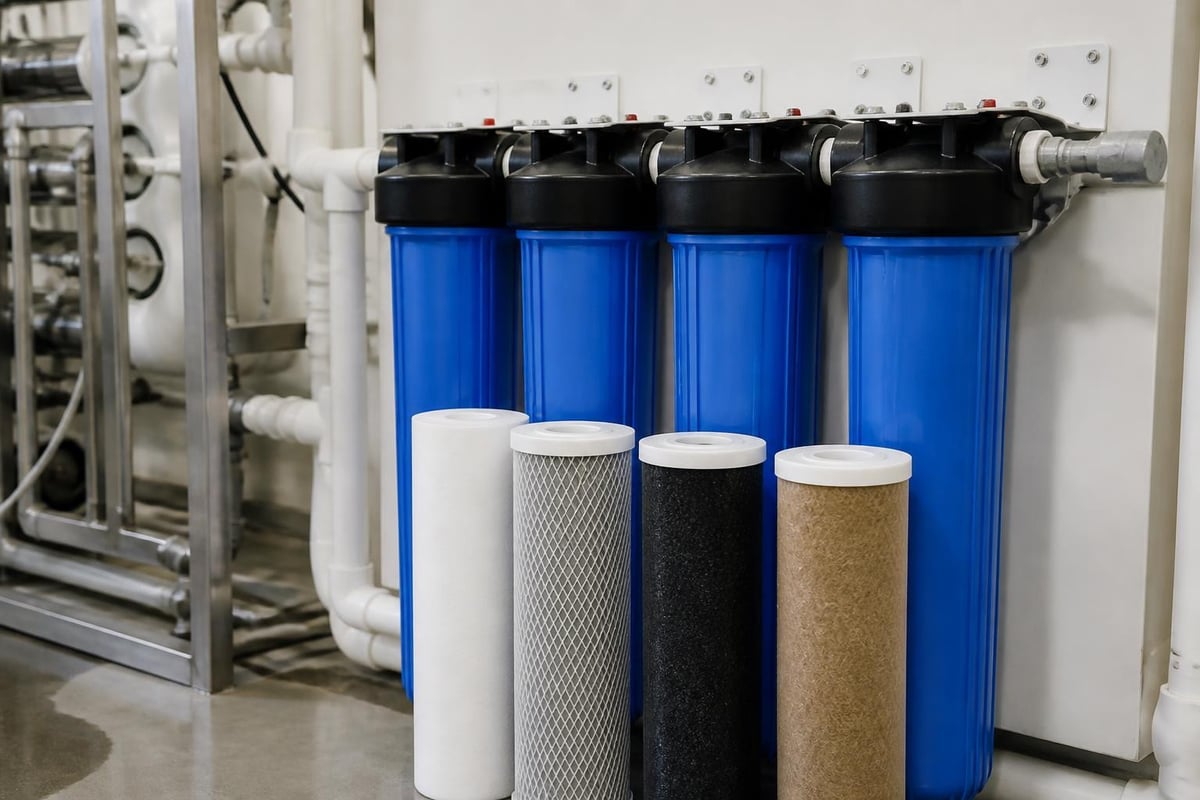
Modern culligan tap water filter models employ a layered approach to water treatment:
- Sediment pre-filter captures larger particles like rust, sand, and silt that can cloud water and damage downstream filter media
- Activated carbon block removes chlorine, chloramines, and organic compounds that affect taste and odor
- Specialized media in premium models targets heavy metals, certain pharmaceuticals, and emerging contaminants
- Final polishing stage ensures consistent flow rate and prevents carbon fines from reaching your glass
This multi-barrier approach provides comprehensive protection against the most common tap water quality issues reported by municipal water customers nationwide. The filtration cartridges typically last between two to three months depending on water quality and household usage patterns, with flow-rate decline serving as a practical indicator that replacement is needed.
Flow Rate and Daily Capacity Considerations
One critical specification often overlooked by consumers is the balance between filtration thoroughness and water flow rate. Culligan tap water filter units typically deliver 0.5 to 0.75 gallons per minute, which proves adequate for drinking and cooking applications but slower than unfiltered tap flow. This reduced rate is a natural consequence of forcing water through dense filter media, and attempts to increase flow by reducing media density generally compromise contaminant removal effectiveness.
Daily capacity ratings range from 30 to 100 gallons depending on the specific model and filter cartridge. Households should calculate their filtered water needs by estimating drinking, cooking, and beverage preparation volumes to ensure the selected model can meet demand without excessive cartridge replacement frequency.
Certification Standards and Performance Verification
Water filter performance claims mean nothing without independent third-party verification. The culligan tap water filter product line carries certifications from NSF International, the most widely recognized testing organization for drinking water treatment products in North America. Understanding what these certifications actually guarantee helps consumers make informed purchasing decisions.
NSF/ANSI Standard Breakdown
| Standard | Purpose | Common Contaminants Tested |
|---|---|---|
| NSF/ANSI 42 | Aesthetic effects (taste, odor, clarity) | Chlorine, particulates, sediment |
| NSF/ANSI 53 | Health effects | Lead, mercury, VOCs, cysts, certain pesticides |
| NSF/ANSI 401 | Emerging contaminants | Prescription drugs, over-the-counter medications, herbicides |
The NSF/ANSI standards for point-of-use filters establish minimum reduction percentages for specific contaminants, requiring filters to demonstrate consistent performance across the entire cartridge life, not just when new. This distinction matters because many inferior products show excellent initial performance that degrades rapidly after the first few weeks of use.
Consumers can verify current certifications for any culligan tap water filter model by checking the NSF International certified products database, which lists specific contaminants each model has been tested and certified to reduce. Culligan also maintains detailed performance certification information on their official website, providing transparency about what each filter can and cannot remove.
What Certifications Don't Cover
Third-party certification provides valuable assurance, but consumers must understand its limitations. Certification tests evaluate performance under controlled laboratory conditions using challenge water formulated to specific standards. Your actual tap water may contain different contaminant concentrations, temperatures, or pH levels that affect filtration efficiency.
Additionally, certification focuses on specific contaminants listed in each standard. A filter certified for lead reduction under NSF/ANSI 53 has been tested for lead specifically, but that certification doesn't automatically extend to other heavy metals or contaminants unless explicitly listed. This specificity requires consumers to match their known or suspected water quality issues with certified performance claims.
Contaminant Removal Capabilities
The culligan tap water filter addresses the most prevalent water quality concerns reported by American households, though performance varies significantly across different models and price points. Understanding what these systems can and cannot remove helps set realistic expectations and ensures you select the appropriate filtration technology for your specific water quality challenges.
Chlorine and Taste Improvement
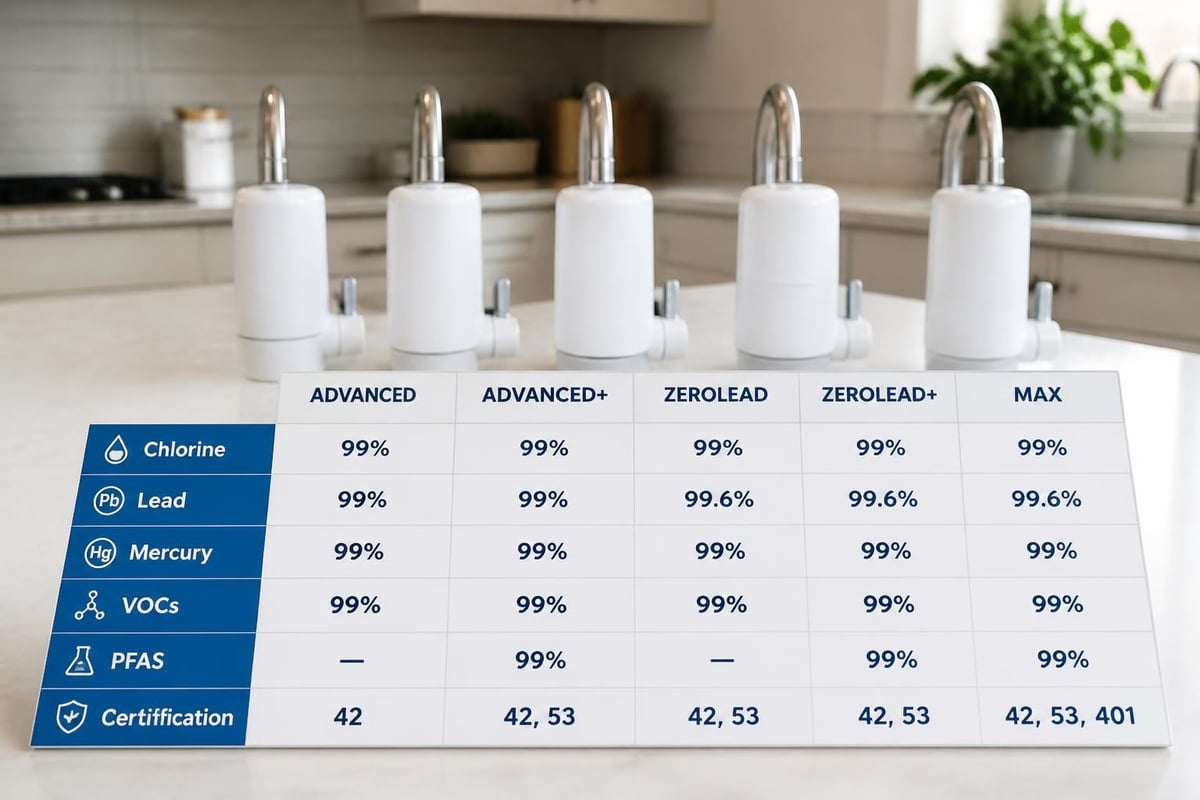
Nearly all culligan tap water filter models excel at chlorine removal, typically achieving 95-99% reduction. Chlorine removal improves taste and odor dramatically, which represents the primary motivation for most filter purchases. However, some municipalities have transitioned to chloramine disinfection, which proves more challenging to remove and requires longer contact time with activated carbon.
Households served by water systems using chloramine should verify their selected filter is specifically certified for chloramine reduction, as standard chlorine-rated filters may provide inadequate performance.
Heavy Metal Reduction
Lead contamination from aging infrastructure remains a serious concern, particularly in older homes with lead service lines or lead-based solder in plumbing systems. Quality culligan tap water filter models certified under NSF/ANSI 53 can reduce lead by 95% or more when the filter cartridge is fresh and properly maintained.
Other heavy metals commonly addressed include:
- Mercury – reduction of 95% or higher in certified models
- Copper – partial reduction, though copper is less effectively removed by activated carbon
- Cadmium – good reduction in models with specialized media
The EPA provides guidance on choosing filters for specific contaminants, emphasizing the importance of matching filtration technology to identified water quality issues rather than assuming any filter addresses all problems.
PFAS and Emerging Contaminants
Per- and polyfluoroalkyl substances (PFAS) have emerged as a major water quality concern nationwide. These synthetic compounds persist in the environment and have been linked to various health effects. Not all culligan tap water filter models effectively remove PFAS, as these contaminants require either specialized activated carbon with appropriate pore structure or additional treatment technologies.
For consumers specifically concerned about PFAS, the EPA provides guidance on identifying certified PFAS-reduction filters, explaining that activated carbon filters must meet specific performance criteria under NSF/ANSI 53 or NSF/ANSI 58 standards. Some states, including Pennsylvania, maintain lists of point-of-use devices certified for PFAS reduction to help consumers navigate certification claims.
Filters certified under NSF/ANSI 401 address a broader category of emerging contaminants including certain prescription medications, over-the-counter pharmaceuticals, and herbicides. This certification has become increasingly important as analytical capabilities have improved and researchers have identified these compounds in source water supplies.
Installation and Maintenance Requirements
One significant advantage of the culligan tap water filter over more complex water treatment systems is the straightforward installation process that requires no plumbing expertise or specialized tools. Most units install in under ten minutes and can be removed just as quickly if needed.
Installation Process Steps
- Remove faucet aerator by unscrewing the threaded tip of your existing faucet (save this component for potential reinstallation)
- Select appropriate adapter from the included set – most packages include multiple adapters to fit various faucet thread patterns
- Thread adapter onto faucet ensuring a tight, leak-free seal (hand-tight is usually sufficient; avoid over-tightening)
- Attach filter housing to the installed adapter, following manufacturer's specific instructions for your model
- Flush the new cartridge by running water in filtered mode for 5-10 minutes to remove carbon fines and prepare the media
The culligan tap water filter typically includes a diverter valve that allows you to switch between filtered and unfiltered water flow. This feature extends cartridge life by reserving filtration capacity for drinking and cooking rather than wasting it on dishwashing or other non-consumptive uses.
Cartridge Replacement and Lifecycle Costs
Filter cartridge longevity depends on three primary factors: water quality conditions, total throughput volume, and contaminant loading. Manufacturer ratings typically specify a time-based replacement interval (e.g., every two months) or a volume-based interval (e.g., every 100 gallons), whichever comes first.
| Household Size | Estimated Monthly Filtered Water Use | Recommended Replacement Frequency |
|---|---|---|
| 1-2 people | 15-25 gallons | Every 3 months |
| 3-4 people | 30-50 gallons | Every 2 months |
| 5+ people | 60+ gallons | Monthly or more frequently |
Calculating lifecycle costs requires considering both the initial system purchase and ongoing cartridge replacement expenses. A culligan tap water filter with a $40 initial cost and $15 cartridges replaced every two months yields an annual cost of approximately $130, or roughly $0.36 per gallon when treating 30 gallons monthly. This compares favorably to bottled water while providing comparable or superior contaminant reduction.
Neglecting timely cartridge replacement undermines filtration performance and can actually worsen water quality. Exhausted carbon loses adsorptive capacity and may begin releasing previously captured contaminants back into the water stream. Saturated sediment filters can harbor bacterial growth and restrict flow to unusable levels.
Selecting the Right Model for Your Water Quality Needs
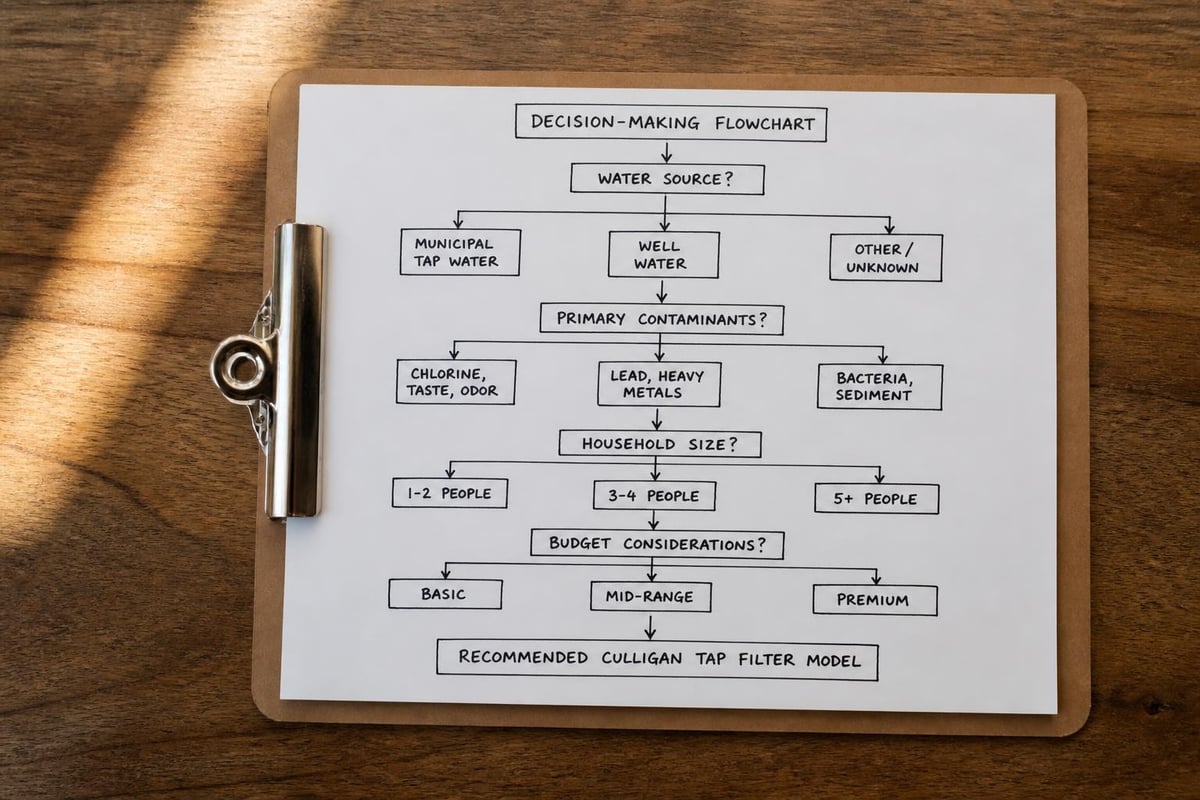
Not all tap water filters address the same contaminants or serve the same household requirements. Selecting the appropriate culligan tap water filter model requires understanding your specific water quality challenges, household consumption patterns, and budget constraints.
Conducting a Water Quality Assessment
Before purchasing any filtration system, obtain current information about your water quality. Municipal water customers receive annual Consumer Confidence Reports detailing detected contaminants and their measured levels. These reports are available online through your water utility's website or upon request.
For a more detailed assessment, consider:
- Professional water testing through certified laboratories for comprehensive analysis
- Home test kits for screening specific contaminants like lead, hardness, or pH
- Reviewing historical violation records through EPA's Safe Drinking Water Information System
Private well owners bear full responsibility for monitoring water quality and face different contaminant risks than municipal customers. The World Health Organization’s guidance on household water treatment provides a global perspective on when point-of-use filtration is appropriate and what technologies address various contaminant categories.
Matching Filter Capabilities to Identified Needs
Once you understand your water quality profile, match those specific concerns to certified culligan tap water filter capabilities:
For primarily aesthetic concerns (chlorine taste, odor, slight discoloration):
- Basic models with NSF/ANSI 42 certification provide adequate performance
- Standard activated carbon filtration addresses these issues effectively
- Lower per-cartridge costs make these economical for high-volume households
For health-related contaminant concerns (lead, mercury, certain pesticides, cysts):
- Select models with NSF/ANSI 53 certification for specific contaminants of concern
- Verify certification covers the exact contaminants identified in your water
- Expect higher cartridge costs reflecting more sophisticated filter media
For emerging contaminant concerns (pharmaceuticals, herbicides, PFAS):
- Premium models with NSF/ANSI 401 certification address pharmaceuticals and herbicides
- PFAS reduction requires specific certification claims – verify before purchasing
- Consider whether point-of-use filtration provides adequate protection or if whole-house treatment is warranted
Budget Considerations and Value Proposition
Culligan tap water filter systems span a price range from approximately $25 for basic models to $80+ for premium units with advanced certifications. This initial investment represents only a fraction of total ownership cost over time.
Calculate total five-year ownership costs by adding the initial purchase price to 30 replacement cartridges (assuming bi-monthly replacement). A $40 system with $12 cartridges costs $400 over five years, while a $70 system with $20 cartridges costs $670. The higher-end system may prove more economical if it eliminates the need for bottled water purchases or addresses specific health concerns that cheaper models cannot.
The Water Quality Association provides consumer guidance on evaluating certification claims and understanding total ownership costs for various water treatment products, helping consumers make informed comparisons across brands and technologies.
Comparing Tap Filters to Alternative Water Treatment Options
The culligan tap water filter occupies a specific niche within the broader water treatment landscape. Understanding how it compares to alternative approaches helps determine whether it represents the optimal solution for your circumstances or if another technology better serves your needs.
Versus Pitcher Filters
Pitcher-style filters offer similar portability and zero-installation convenience, but with significant operational differences:
- Lower flow rate – pitchers require time to filter a reservoir rather than providing on-demand filtered water
- Smaller daily capacity – typically 5-10 cups per fill versus continuous availability from tap systems
- Similar contaminant reduction – comparable NSF certifications for basic models
- Lower upfront cost – pitchers typically cost $15-35 versus $25-80 for tap-mounted systems
Tap-mounted systems excel for larger households or those who regularly need filtered water for cooking, while pitchers suit smaller households focused primarily on drinking water.
Versus Under-Sink Systems
Under-sink filtration systems provide higher capacity and more sophisticated treatment but require permanent installation:
| Feature | Culligan Tap Filter | Under-Sink System |
|---|---|---|
| Installation complexity | DIY, 5-10 minutes | Requires basic plumbing skills or professional installation |
| Typical cost | $25-80 | $150-400+ |
| Cartridge lifespan | 2-3 months | 6-12 months |
| Flow rate | 0.5-0.75 GPM | 0.5-2.5 GPM depending on technology |
| Contaminant removal | Good for common contaminants | Excellent; can include RO for comprehensive removal |
| Portability | Fully portable, moves with you | Permanent installation |
Under-sink systems justify their higher cost for long-term homeowners dealing with serious water quality issues, while culligan tap water filter units make more sense for renters, budget-conscious consumers, or those with moderate water quality concerns.
Versus Reverse Osmosis Systems
Reverse osmosis (RO) represents the most comprehensive point-of-use treatment technology, removing dissolved solids that activated carbon cannot address. However, this capability comes with significant tradeoffs:
- Much higher initial cost – RO systems typically start at $200 and exceed $500 for quality installations
- Water waste – RO systems discharge 2-4 gallons for every gallon produced
- Removes beneficial minerals – some consumers find RO water tastes flat
- Requires storage tank – limited instant availability compared to tap filters
- More complex maintenance – multiple cartridges and membrane requiring different replacement schedules
For contaminants like fluoride, nitrates, total dissolved solids, or comprehensive PFAS removal, RO often becomes necessary. For the majority of municipal water customers facing primarily taste, odor, and common contaminant concerns, a properly certified culligan tap water filter provides adequate protection at a fraction of the cost and complexity.
Real-World Performance Considerations
Laboratory certification testing occurs under controlled conditions that rarely match actual household use. Understanding the real-world factors that influence culligan tap water filter performance helps set appropriate expectations and maintain optimal effectiveness.
Water Temperature and Pressure Effects
Filter performance specifications assume water temperatures between 40-100°F and pressure between 40-80 PSI. Extreme deviations from these parameters can significantly impact contaminant reduction efficiency and flow rate.
Cold water slows adsorption kinetics in activated carbon, potentially reducing removal efficiency for organic contaminants. Conversely, hot water can damage filter media and void warranties. Most manufacturers explicitly prohibit using tap-mounted filters with hot water, both to preserve filter integrity and prevent scalding during cartridge changes.
Low water pressure reduces contact time between water and filter media, potentially allowing contaminants to pass through inadequately treated. High pressure can channel water around filter media rather than through it, reducing effectiveness.
Seasonal and Usage Pattern Variations
Households experience fluctuating water quality throughout the year. Agricultural runoff increases in spring, treatment plant adjustments occur seasonally, and source water characteristics change with precipitation and temperature cycles. A culligan tap water filter that performs excellently for six months may show reduced effectiveness when challenging conditions emerge.
Monitor filtered water quality through sensory evaluation – changes in taste, odor, or appearance often signal either deteriorating source water quality or exhausted filter capacity. When seasonal water quality declines, consider more frequent cartridge replacement to maintain protection levels.
Usage patterns also matter. A filter designed for steady, distributed use throughout the day may perform differently when subjected to heavy burst loads followed by extended stagnation. Stagnant water in filter housings can harbor bacterial growth, while heavy instantaneous demand may exceed the filter's designed flow-through capacity.
Potential Limitations and When to Seek Alternatives
The culligan tap water filter excels within its designed capabilities but cannot address all water quality scenarios. Recognize these situations where alternative treatment approaches become necessary:
- Microbiological contamination – while some models reduce cysts, tap filters are not designed for disinfection or bacteria removal
- Very hard water – activated carbon does not soften water or remove hardness minerals
- High sediment loads – wells or systems with excessive particulates will rapidly clog tap filters
- Comprehensive PFAS removal – some PFAS compounds require RO or specialized media beyond tap filter capabilities
- Whole-house protection – point-of-use filters protect only one tap, leaving shower, laundry, and other uses unfiltered
For complex water quality challenges involving multiple contaminant categories, microbiological concerns, or very poor source water, professional water treatment assessment and whole-house solutions often prove more effective and economical than attempting to address issues with point-of-use devices alone.
Terrabuilds Group specializes in comprehensive water quality assessment and treatment solutions ranging from point-of-use filtration to whole-house systems and borehole development. Their engineering expertise helps identify the most cost-effective, reliable approach for your specific water quality challenges and usage requirements.
Integration with Broader Water Security Strategies
While a culligan tap water filter provides valuable point-of-use protection, truly comprehensive water security requires a layered approach addressing source water quality, distribution system integrity, and household-level treatment and storage.
Multi-Barrier Approach to Water Safety
The concept of multiple barriers recognizes that no single intervention guarantees perfect water quality. Combining source protection, municipal treatment, distribution system maintenance, and point-of-use filtration creates redundant safeguards:
- Source water protection through watershed management and contamination prevention
- Municipal treatment providing primary disinfection and contaminant removal
- Distribution system integrity preventing recontamination during delivery
- Point-of-use filtration addressing remaining contaminants and distribution system contributions
- Proper storage preventing contamination after filtration
This defense-in-depth philosophy acknowledges that each barrier has limitations but collectively provides robust protection. Your culligan tap water filter represents the final barrier, polishing already-treated municipal water or providing additional treatment for well water.
Emergency Preparedness and Backup Systems
Water system failures, natural disasters, or contamination events can suddenly compromise tap water safety. Point-of-use filters offer valuable emergency backup, but only if appropriately selected and maintained for that purpose.
Standard activated carbon tap filters have limited effectiveness against microbiological contamination that might occur during infrastructure failures or natural disasters. For emergency preparedness, consider:
- Maintaining unopened replacement cartridges for extended filtering during supply disruptions
- Understanding your filter's capabilities and limitations for emergency use scenarios
- Having backup water purification methods (boiling, chemical disinfection, or certified microbiological filters) for situations beyond your tap filter's capabilities
- Storing adequate quantities of treated water for household needs during extended outages
The combination of properly maintained culligan tap water filter systems for daily use and appropriate emergency backup capabilities provides comprehensive preparedness for both routine water quality concerns and unexpected disruptions.
Long-Term Infrastructure Considerations
Households investing in water filtration often wonder whether they should simultaneously pursue infrastructure improvements that might reduce filtration needs. This calculation depends on your specific circumstances:
If you own your property and face ongoing water quality issues, addressing root causes through well rehabilitation, service line replacement, or whole-house treatment may prove more cost-effective over a 10-20 year timeframe than continuous point-of-use filtration. Professional assessment helps quantify these tradeoffs.
If you rent or expect to relocate, the culligan tap water filter's portability and minimal capital investment make it clearly preferable to permanent infrastructure modifications you cannot take with you or recover investment from.
If source water quality will remain imperfect regardless of infrastructure spending (due to municipal source water characteristics, agricultural influences, or geological factors), accept that some level of filtration represents a permanent household necessity and select systems optimized for long-term operational efficiency rather than viewing filtration as a temporary stopgap.
The culligan tap water filter provides accessible, effective point-of-use treatment for the most common drinking water quality concerns facing American households today. By understanding certification standards, matching filter capabilities to your specific water quality challenges, and maintaining systems properly, you can achieve significant water quality improvements at reasonable cost. Whether you're addressing taste and odor issues, reducing specific contaminants of concern, or adding a final polishing step to already-treated water, informed selection and diligent maintenance ensure optimal performance. For more complex water quality challenges, comprehensive source water assessment, or integrated treatment solutions including borehole development and whole-house systems, Terrabuilds Group brings engineering expertise and commitment to delivering reliable water treatment solutions tailored to your specific needs.