Water quality remains one of the most critical infrastructure challenges facing businesses, municipalities, and communities across America. Understanding water treatment water treatment processes has never been more important as regulatory standards tighten and emerging contaminants demand innovative solutions. Whether you're managing a commercial facility, overseeing municipal infrastructure, or planning residential development, selecting the right treatment approach determines health outcomes, operational costs, and long-term sustainability. This comprehensive guide explores modern treatment technologies, regulatory frameworks, and implementation strategies that deliver safe, reliable water supplies.
Understanding Modern Water Treatment Systems
Water treatment water treatment encompasses a broad spectrum of physical, chemical, and biological processes designed to remove contaminants and produce water suitable for specific end uses. The complexity of these systems varies dramatically based on source water quality, regulatory requirements, and intended applications.
Primary Treatment Objectives
Every water treatment system must address fundamental quality parameters before water reaches end users. Pathogen removal stands as the foremost priority, eliminating bacteria, viruses, and parasites that cause waterborne disease. Turbidity reduction removes suspended particles that cloud water and harbor microorganisms. Chemical contaminant control addresses both naturally occurring substances like arsenic and fluoride, plus anthropogenic pollutants including industrial chemicals and agricultural runoff.
The EPA’s overview of drinking water treatment technologies provides detailed guidance on conventional unit processes and emerging treatment methods. These baseline objectives shape every treatment train regardless of scale or setting.
Source Water Characterization
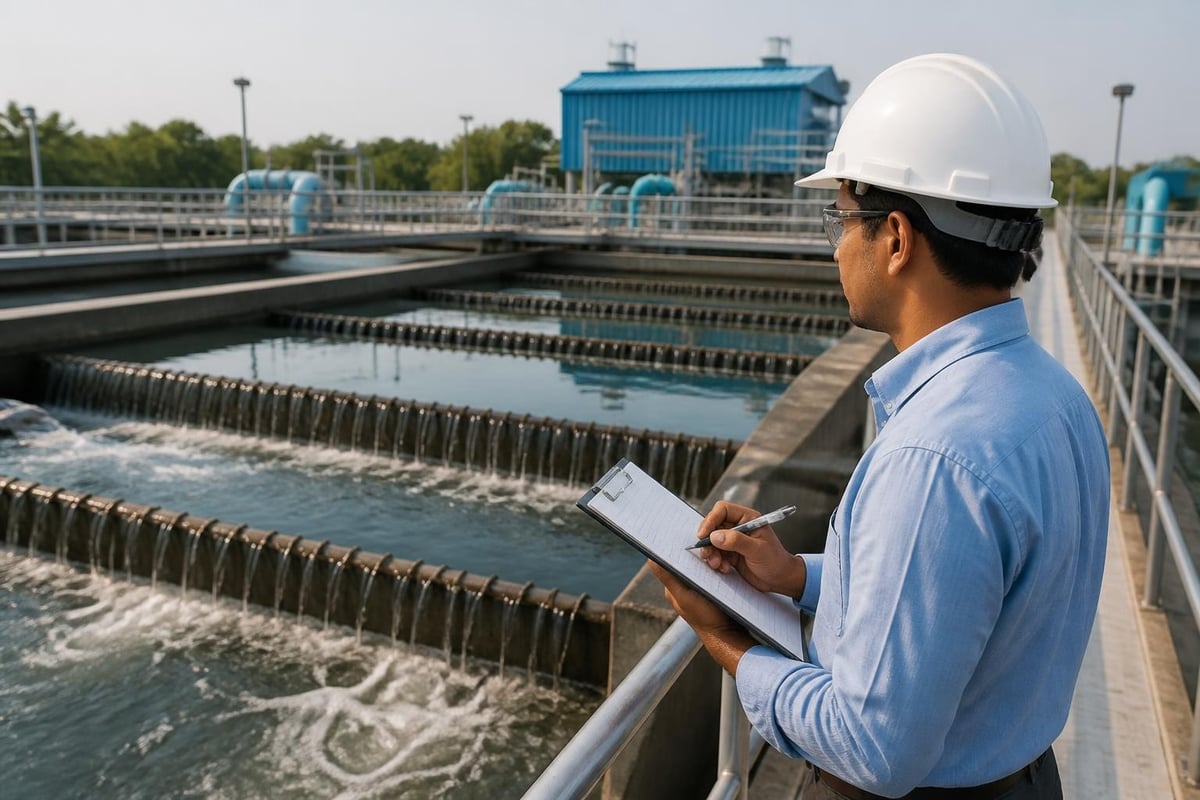
Successful water treatment water treatment begins with comprehensive source water assessment. Surface water sources-rivers, lakes, and reservoirs-typically carry higher microbial loads and seasonal variability in turbidity and organic content. Groundwater sources generally present lower pathogen risks but may contain elevated dissolved minerals, metals, or naturally occurring radioactive materials.
Testing protocols should evaluate:
- Microbiological indicators (total coliforms, E. coli, virus surrogates)
- Physical parameters (turbidity, temperature, color, odor)
- Inorganic chemicals (nitrates, heavy metals, hardness)
- Organic compounds (pesticides, volatile organics, disinfection byproduct precursors)
- Radiological contaminants (radium, uranium, radon)
Seasonal monitoring captures variability and informs treatment design. A surface water source experiencing spring runoff requires more robust filtration than the same source during summer low-flow periods.
Conventional Treatment Technologies
The backbone of water treatment water treatment relies on proven processes developed over decades of engineering practice and research. These technologies form treatment trains that progressively remove contaminants through multiple barriers.
Coagulation and Flocculation
Chemical coagulation destabilizes suspended particles, allowing them to aggregate into larger flocs during gentle mixing. Aluminum sulfate (alum) and ferric chloride serve as primary coagulants, though polymer-based alternatives gain traction in specific applications. Rapid mixing disperses coagulant throughout the water in 30-60 seconds. Slow mixing (flocculation) follows for 20-40 minutes, building large, settleable flocs.
Dosage optimization depends on raw water pH, alkalinity, temperature, and turbidity. Jar testing establishes optimal chemical doses for varying source water conditions. Seasonal adjustment protocols ensure consistent performance despite changing raw water characteristics.
Sedimentation and Clarification
Gravity separation removes flocculated particles in sedimentation basins designed for 2-4 hour retention times. Conventional rectangular basins provide reliable performance with simple operation. High-rate clarifiers incorporate inclined plates or tubes, reducing footprint by 50-70 percent compared to conventional designs. Solids contact clarifiers combine coagulation, flocculation, and sedimentation in a single unit, ideal for compact installations.
| Clarifier Type | Hydraulic Loading Rate | Footprint | Complexity | Best Application |
|---|---|---|---|---|
| Conventional Basin | 500-800 gpd/ft² | Large | Low | Municipal, stable flow |
| High-Rate Plate | 1,500-3,000 gpd/ft² | Medium | Medium | Space-constrained sites |
| Solids Contact | 1,000-2,000 gpd/ft² | Small | High | Industrial, variable quality |
| Ballasted Floc | 3,000-6,000 gpd/ft² | Very Small | High | Peak demand, upgrades |
Filtration Systems
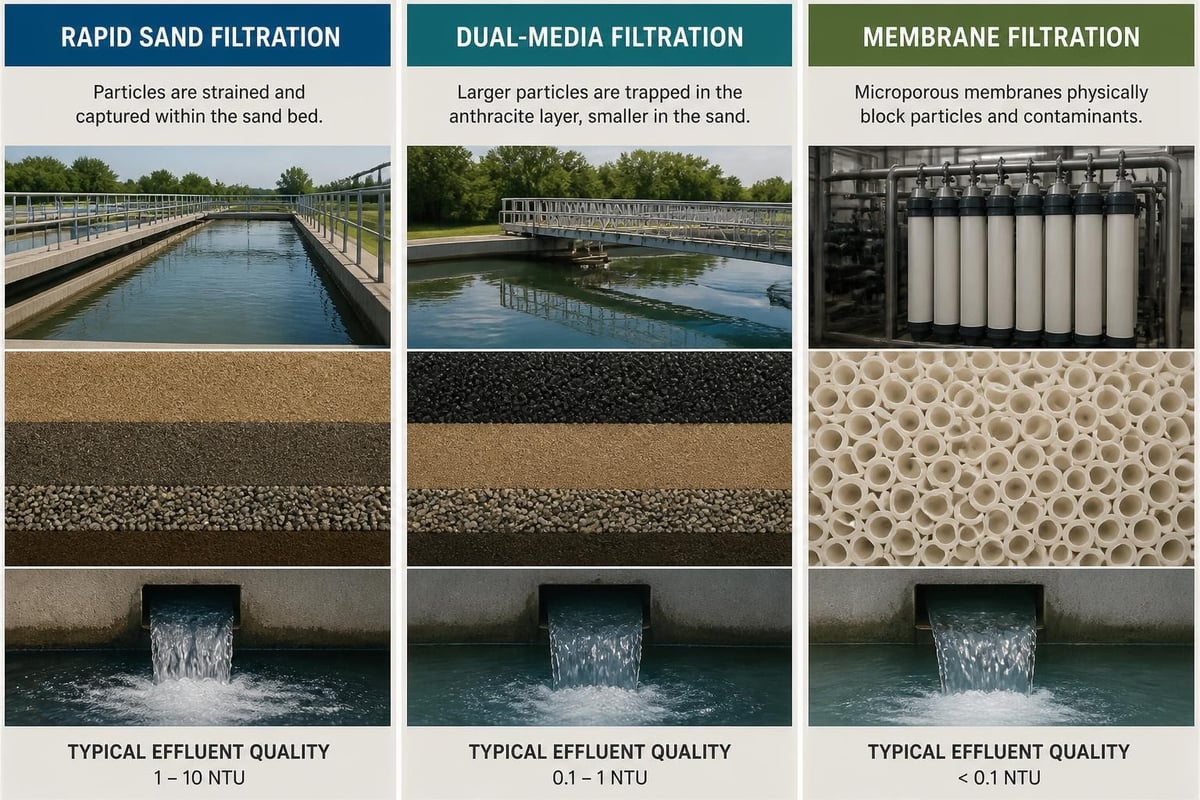
Filtration represents the critical barrier removing particles that escape sedimentation. Rapid sand filters using 24-36 inches of granular media achieve 0.3-1.0 NTU effluent turbidity at 2-5 gpm/ft² loading rates. Dual-media filters layering anthracite over sand extend filter runs and improve particle capture. Multimedia filters add garnet beneath sand for enhanced depth filtration.
Direct filtration eliminates sedimentation for high-quality source waters, applying coagulant immediately before filtration. This approach reduces capital costs by 30-40 percent but demands consistent influent quality and skilled operation.
Advanced Treatment and Emerging Technologies
Water treatment water treatment continues evolving as new contaminants emerge and membrane technologies mature. Advanced processes address challenges conventional treatment cannot fully resolve.
Membrane Filtration Processes
Pressure-driven membrane systems separate contaminants based on molecular size through synthetic barriers. Applications range from particle removal to dissolved salt rejection.
Microfiltration (MF) and ultrafiltration (UF) remove suspended solids, bacteria, and viruses while passing dissolved substances. Operating at 5-30 psi, these systems produce consistent effluent quality independent of operator skill. The peer-reviewed research on membrane filtration demonstrates reliable pathogen removal exceeding 4-log reduction values.
Nanofiltration (NF) and reverse osmosis (RO) reject dissolved contaminants including hardness, nitrates, and synthetic organics. RO systems operating at 150-400 psi remove 95-99 percent of total dissolved solids, producing high-purity water for critical applications. The Nature Reviews article on membrane desalination provides comprehensive technical detail on pressure-driven processes and recent advances in membrane materials.
Activated Carbon Adsorption
Granular activated carbon (GAC) removes organic compounds, taste and odor compounds, and disinfection byproduct precursors through adsorption onto highly porous carbon surfaces. Post-filter contactors polish filtered water before disinfection. Intermediate contactors between sedimentation and filtration target specific organic removal. Carbon service life depends on empty bed contact time, typically designed for 10-20 minute contact at design flow.
Thermal reactivation regenerates spent carbon, recovering 90-95 percent of adsorptive capacity at 20-30 percent of virgin carbon cost. Larger systems justify on-site reactivation furnaces, while smaller installations contract with regional regeneration facilities.
Advanced Oxidation Processes
Advanced oxidation generates hydroxyl radicals that destroy recalcitrant organic compounds resistant to conventional treatment. Ozone-hydrogen peroxide systems treat taste and odor compounds, pesticides, and pharmaceutical residuals. UV-hydrogen peroxide provides similar oxidation without ozone generation equipment. Applications target specific contaminants at concentrations below 100 μg/L where adsorption becomes economically impractical.
Disinfection and Residual Maintenance
Pathogen inactivation remains the fundamental objective of water treatment water treatment, protecting public health from microbial contamination. Multiple disinfection strategies offer different advantages depending on system requirements.
Primary Disinfection Options
Free chlorine provides cost-effective, reliable disinfection with residual protection throughout distribution systems. Dosing 1-5 mg/L achieves 4-log virus inactivation with 30-minute contact time at pH 7-8. Disinfection byproduct formation requires management through pH control, contact time optimization, and precursor removal.
Chloramines (combined chlorine) produce fewer trihalomethanes and haloacetic acids than free chlorine while maintaining stable residuals in large distribution systems. The chlorine-to-ammonia ratio of 4:1 to 5:1 by weight produces monochloramine, the most effective chloramine species. Systems experiencing nitrification must implement flushing programs and temporary free chlorine conversions.
Ultraviolet (UV) disinfection inactivates pathogens without chemical addition or disinfection byproduct formation. Medium-pressure UV lamps delivering 40 mJ/cm² dose achieve 4-log Cryptosporidium inactivation, addressing protozoan cysts resistant to chemical disinfectants. UV systems require secondary disinfectant addition to maintain distribution system residuals.
Ozone delivers powerful oxidation and disinfection, achieving 3-log Giardia inactivation at 0.5 mg/L with 5-minute contact. Lack of residual necessitates secondary disinfection. Bromate formation in bromide-containing waters requires careful process control.
| Disinfectant | CT for 3-log Giardia | Residual Stability | DBP Formation | Relative Cost |
|---|---|---|---|---|
| Free Chlorine | 150 mg·min/L | Excellent | Moderate-High | Low |
| Chloramines | 1,600 mg·min/L | Excellent | Low | Low |
| Ozone | 2 mg·min/L | None | Low (bromate risk) | High |
| UV Light | 40 mJ/cm² | None | None | Medium |
Distribution System Management
Water treatment water treatment extends beyond the treatment plant into distribution infrastructure. Maintaining disinfectant residuals throughout the system prevents microbial regrowth. Target residuals of 0.5-2.0 mg/L free chlorine or 2.0-4.0 mg/L chloramines balance disinfection effectiveness against taste concerns and pipe corrosion.
Distribution system monitoring includes:
- Residual chlorine at representative locations (minimum 0.2 mg/L)
- Heterotrophic plate count bacteria (target <500 CFU/mL)
- Coliform samples per regulated frequency (zero tolerance for E. coli)
- Water age modeling to identify stagnant zones
Systematic flushing, storage tank maintenance, and infrastructure rehabilitation programs maintain distribution system integrity.
Regulatory Framework and Compliance
Water treatment water treatment in the United States operates under comprehensive federal and state regulations establishing minimum quality standards and monitoring requirements.
Safe Drinking Water Act Requirements
The Safe Drinking Water Act authorizes EPA to set National Primary Drinking Water Regulations for contaminants posing health risks. The WHO Guidelines for Drinking-Water Quality provide complementary international standards and health-based targets that inform regulatory development.
Current regulations establish Maximum Contaminant Levels (MCLs) for over 90 contaminants across categories:
- Microbiological (Total Coliform Rule, Surface Water Treatment Rule)
- Disinfectants and byproducts (THMs, HAAs, chlorite, bromate)
- Inorganic chemicals (arsenic, nitrate, lead, copper)
- Organic chemicals (pesticides, VOCs, SOCs)
- Radionuclides (radium, uranium, gross alpha)
The 2024 PFAS National Primary Drinking Water Regulation established MCLs for six per- and polyfluoroalkyl substances. The EPA guidance on PFAS treatment outlines granular activated carbon, ion exchange, and reverse osmosis as effective removal technologies.
Monitoring and Reporting
Compliance monitoring frequency depends on system size, source water type, and contaminant vulnerability. Systems serving 10,000 people sample at 40 distribution sites monthly for total coliforms. Disinfection byproduct monitoring occurs quarterly to annually depending on running annual averages relative to MCLs.
Consumer Confidence Reports delivered annually inform customers about water quality, contaminant detections, and health information. Violation reporting to primacy agencies triggers public notification within 24 hours for acute risks, 30 days for other MCL violations.
Specialized Treatment Applications
Beyond municipal drinking water, water treatment water treatment addresses diverse commercial, industrial, and point-of-use applications requiring specialized approaches.
Industrial Process Water
Manufacturing operations demand water quality specifications exceeding drinking water standards. Boiler feedwater requires demineralization preventing scale formation and corrosion in high-pressure steam systems. Ultrapure water for semiconductor manufacturing achieves resistivity above 18 MΩ·cm through multiple RO passes, mixed-bed ion exchange, and UV oxidation.
Treatment train design balances water quality targets against capital and operating costs. A manufacturing facility requiring 50,000 gallons per day of low-conductivity water might implement:
- Multimedia filtration removing suspended solids
- Water softening reducing hardness to <1 mg/L as CaCO₃
- Reverse osmosis rejecting 98% of dissolved ions
- Mixed-bed deionization polishing to specification
Decentralized and Point-of-Use Systems
Small community systems and individual households increasingly adopt point-of-use treatment addressing localized contamination. The WHO evaluation scheme for household water treatment independently tests and rates technologies for health performance.
Reverse osmosis under-sink units remove lead, nitrates, and emerging contaminants. Activated carbon pitcher filters reduce chlorine taste and some organic compounds. Ultraviolet point-of-use devices provide final barrier disinfection for immune-compromised individuals.
Proper installation, maintenance, and filter replacement determine actual performance. Systems lacking adequate maintenance often deliver little benefit despite consumer perception of protection.
Water Reuse and Recycling
Water scarcity drives adoption of potable and non-potable reuse systems recovering value from wastewater. The National Academies comprehensive report on water reuse examines treatment requirements, public health considerations, and implementation frameworks.
Direct potable reuse treats wastewater to drinking water standards through multi-barrier approaches: membrane bioreactors, reverse osmosis, advanced oxidation, and engineered storage buffers. Indirect potable reuse introduces treated wastewater into environmental buffers (aquifers, surface reservoirs) before subsequent withdrawal and treatment.
Non-potable applications including irrigation, cooling tower makeup, and toilet flushing require less intensive treatment: filtration and disinfection often suffice for these lower-risk uses.
Emerging Contaminants and Future Challenges
Water treatment water treatment continues adapting to newly identified threats and evolving scientific understanding of health risks.
Per- and Polyfluoroalkyl Substances (PFAS)
These synthetic chemicals persist in the environment and accumulate in human tissue. Conventional treatment provides minimal PFAS removal. Effective technologies include:
- Granular activated carbon with frequent replacement or destruction
- Ion exchange resins specifically designed for PFAS capture
- High-pressure membranes (nanofiltration and reverse osmosis)
The USGS investigations of organic compounds in drinking water sources document widespread occurrence and treatment effectiveness for various contaminant classes.
Microplastics and Nanomaterials
Emerging research detects microplastic particles in source waters and treated drinking water. Health effects remain under investigation, but precautionary approaches suggest enhanced filtration. Membrane processes and optimized coagulation-filtration show promise for particle removal.
Climate Change Impacts
Shifting precipitation patterns, increased storm intensity, and extended droughts affect source water quality. Treatment systems must accommodate wider quality variation. Algal blooms driven by warmer temperatures produce taste and odor compounds plus cyanotoxins requiring enhanced oxidation and adsorption.
Resilience planning incorporates:
- Redundant treatment barriers maintaining protection during upset conditions
- Alternative source development diversifying supply portfolios
- Real-time monitoring enabling rapid response to quality changes
- Adaptive management updating operations as conditions shift
Implementation Strategies for Successful Projects
Delivering effective water treatment water treatment requires systematic planning, proper design, and operational excellence throughout project lifecycles.
Feasibility Assessment and Planning
Successful projects begin with clear objective definition and constraint identification. Stakeholder engagement builds support and identifies concerns early. Source water evaluation through extended monitoring characterizes quality variability. Regulatory review confirms applicable requirements and permitting pathways.
Pilot testing validates treatment assumptions before full-scale commitment. A three-month pilot study treating 5-10 gpm documents performance across seasonal conditions, optimizes chemical doses, and identifies operational challenges. Pilot data supports design refinement and reduces construction risk.
Design and Construction Considerations
Treatment plant design balances performance, reliability, operational simplicity, and lifecycle cost. Redundancy in critical components maintains production during maintenance or equipment failure. Flexibility accommodates future expansion and changing source water or regulations. Automation reduces operator burden while maintaining control during upsets.
| Design Element | Conservative Approach | Aggressive Approach | Impact on Cost | Impact on Risk |
|---|---|---|---|---|
| Redundancy | 100% backup capacity | 50% backup capacity | +25% capital | Low vs. Medium |
| Filtration Rate | 2 gpm/ft² | 5 gpm/ft² | +40% footprint | Low vs. High |
| Contact Time | 2x minimum | 1x minimum | +20% tank volume | Low vs. Medium |
| Automation | Full SCADA | Manual operation | +15% capital | Low vs. High |
Competitive bidding on detailed specifications ensures qualified contractors and fair pricing. Construction oversight by experienced professionals catches errors early and verifies compliance with design intent.
Operations and Maintenance Planning
The best-designed water treatment water treatment system fails without competent operation and preventive maintenance. Operator certification ensures baseline knowledge of treatment principles and regulatory compliance. Standard operating procedures document routine tasks, emergency responses, and optimization protocols.
Preventive maintenance schedules extend equipment life and prevent unexpected failures. Quarterly tasks include pump seal inspection, valve exercising, and instrument calibration. Annual tasks address motor bearing lubrication, filter media sampling, and tank inspection. Comprehensive asset management programs track maintenance history and guide replacement decisions.
Performance benchmarking identifies improvement opportunities by comparing operational metrics against similar systems. Energy consumption per million gallons treated, chemical cost per million gallons, and staffing ratios provide useful comparisons when adjusted for local conditions.
Modern water treatment demands sophisticated understanding of contaminant risks, treatment technologies, and regulatory requirements. Whether addressing municipal supply, industrial process needs, or decentralized applications, successful water treatment water treatment projects combine proven technologies with skilled operation and adaptive management. Terrabuilds Group delivers comprehensive water treatment and borehole drilling engineering solutions backed by deep technical expertise and commitment to quality. From initial feasibility assessment through design, construction, and operational support, their experienced team ensures your water infrastructure meets current needs while adapting to future challenges.