Professional water treatment systems represent significant investments in home or business infrastructure, delivering clean, conditioned water for years when properly maintained. Regular water conditioner service ensures optimal performance, extends equipment lifespan, and protects your investment in quality water. Understanding service requirements, maintenance schedules, and professional care options helps property owners maximize system efficiency while avoiding costly repairs or premature replacement.
Understanding Water Conditioner Service Requirements
Water conditioner service encompasses routine maintenance, performance monitoring, component inspection, and periodic professional evaluations that keep treatment systems operating at peak efficiency. Unlike simple appliances, water conditioners function continuously, processing hundreds or thousands of gallons daily while removing hardness minerals, contaminants, and impurities from your water supply.
Core Service Components
Every comprehensive service program addresses multiple system aspects simultaneously. Regular inspections verify proper operation while identifying potential issues before they escalate into major failures.
Essential service tasks include:
- Salt or potassium level monitoring and replenishment
- Control valve inspection and calibration
- Resin bed condition assessment
- Brine tank cleaning and sanitization
- Flow rate and pressure testing
- Electrical system verification
The EPA WaterSense consumer guide emphasizes that proper maintenance significantly impacts treatment efficiency and water conservation. Systems running without adequate service consume more salt, water, and energy while delivering suboptimal water quality.
Service Frequency Considerations
Maintenance schedules vary based on system type, water hardness, household size, and equipment age. Most residential installations benefit from professional water conditioner service at least annually, with quarterly checks recommended for commercial applications or high-capacity residential systems.
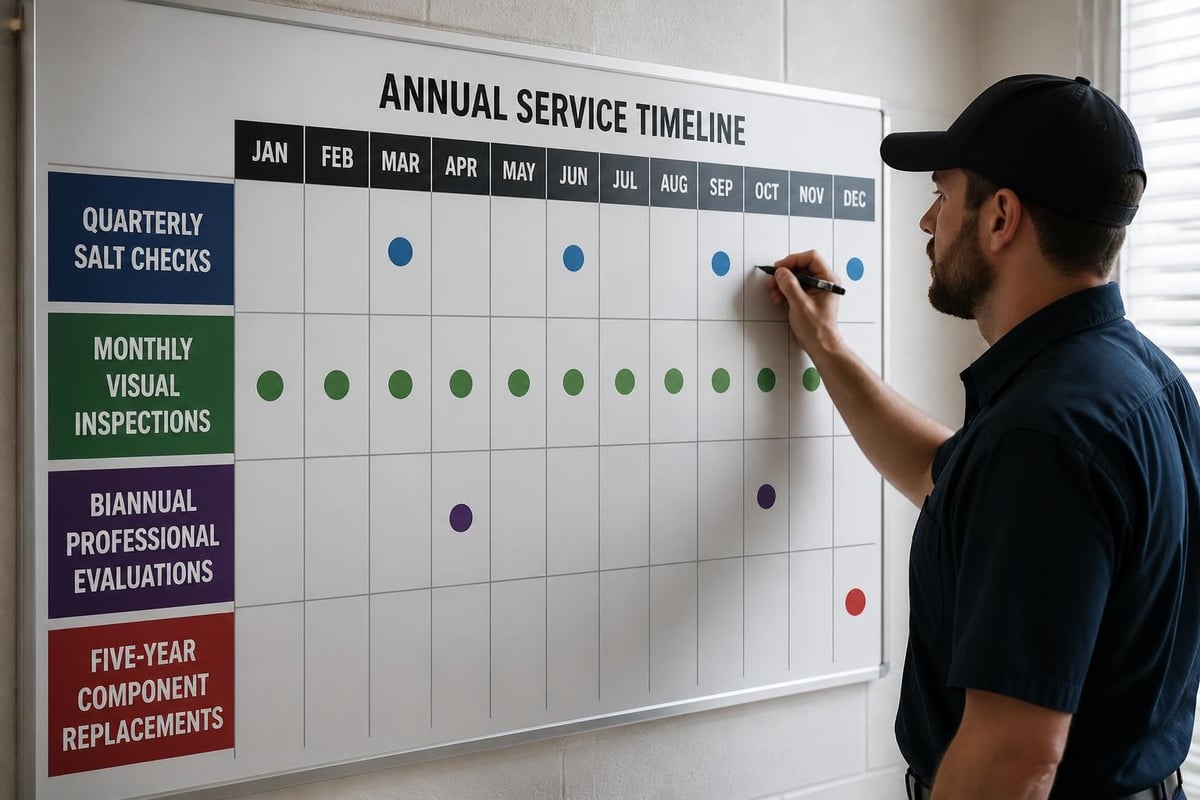
Properties with extremely hard water or high iron content may require more frequent attention. Wells drawing from shallow aquifers or areas with agricultural runoff present unique challenges that necessitate customized service intervals.
| Service Type | Residential Frequency | Commercial Frequency | Critical Tasks |
|---|---|---|---|
| Professional inspection | Annual | Quarterly | Full system diagnostic, valve calibration |
| Salt replenishment | Monthly | Bi-weekly | Maintain proper brine concentration |
| Brine tank cleaning | Annual | Semi-annual | Remove sediment, sanitize tank |
| Resin replacement | 10-15 years | 5-10 years | Restore ion exchange capacity |
Professional vs. DIY Maintenance Approaches
Property owners often wonder which service tasks they can handle independently and when professional expertise becomes necessary. While basic maintenance falls within most homeowners' capabilities, comprehensive water conditioner service requires specialized knowledge, diagnostic equipment, and technical training.
Tasks Suitable for Property Owners
Conscientious owners can manage several routine maintenance activities between professional service visits. These tasks maintain system performance and help identify issues requiring expert attention.
Regular monitoring includes checking salt levels weekly, ensuring at least half-full capacity to maintain proper brine concentration. The Water Quality Association technical guidance recommends inspecting for salt bridges-hardened crusts that prevent proper dissolution-which can be broken up carefully with a broom handle.
Monthly visual inspections should verify clean brine tanks, check for water leaks around fittings, listen for unusual noises during regeneration cycles, and confirm bypass valves remain in service position. These simple checks take minutes but provide valuable early warning of potential problems.
When Professional Service Becomes Essential
Certain maintenance activities demand professional water conditioner service due to technical complexity, safety concerns, or warranty requirements. Attempting advanced repairs without proper training risks system damage, voided warranties, and inadequate water treatment.
Professional service becomes necessary for:
- Control valve disassembly and internal component replacement
- Resin bed sampling and exhaustion testing
- Electronic controller programming and diagnostics
- Pressure vessel inspection and safety certification
- Water quality testing and treatment optimization
- Warranty-required annual inspections
Consumer Reports guidance on water softeners emphasizes that professional service protects both equipment and water quality. Improperly maintained systems may fail to remove hardness adequately, leading to scale buildup, appliance damage, and ineffective cleaning.
Comprehensive Service Procedures and Protocols
Professional water conditioner service follows systematic protocols ensuring thorough evaluation and optimal system configuration. Technicians employ diagnostic tools, testing equipment, and manufacturer-specific procedures to assess every aspect of conditioner performance.
System Performance Evaluation
Service begins with baseline testing establishing current operating parameters. Technicians measure inlet and outlet water hardness, flow rates, pressure differentials, and regeneration cycle timing to identify deviations from optimal performance.
Water quality testing reveals whether the system effectively removes target contaminants. Testing may include hardness, iron, manganese, pH, and total dissolved solids depending on your water source and treatment goals. The American Water Works Association technical standards provide industry benchmarks for acceptable water quality parameters.
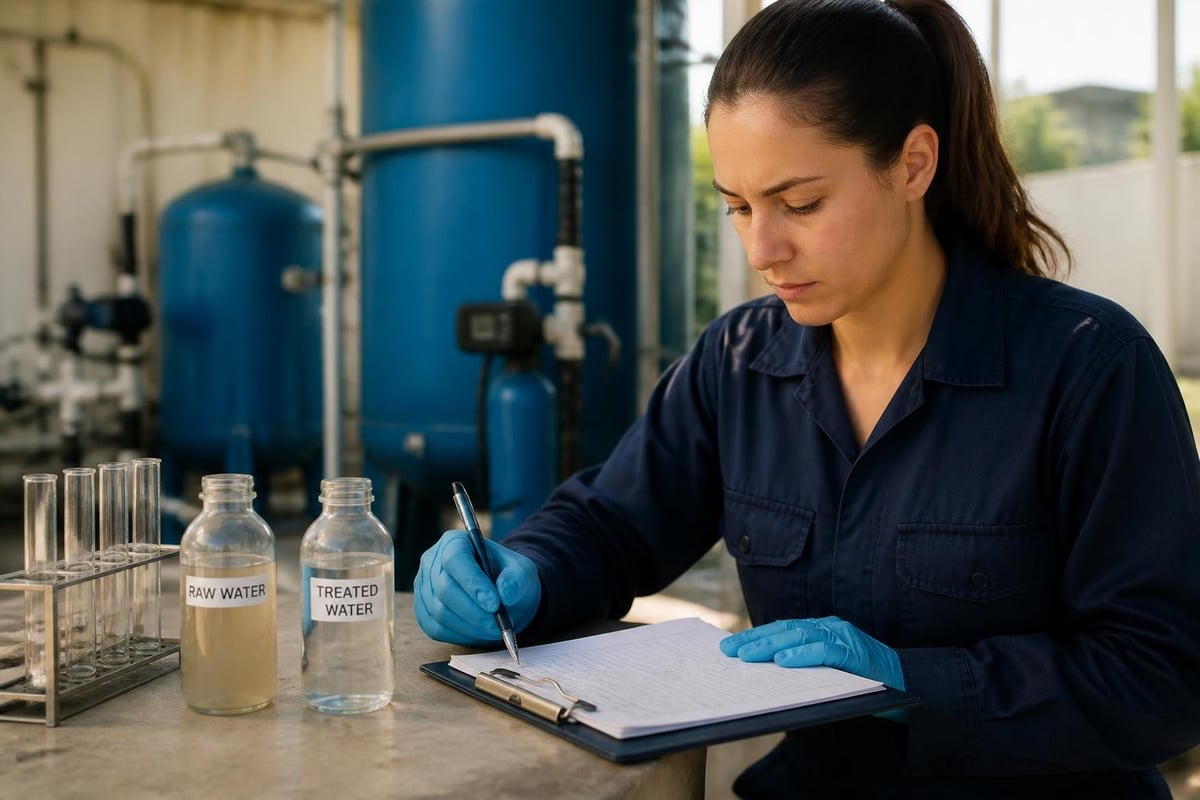
Control valve diagnostics verify proper switching between service and regeneration modes. Technicians test pressure switches, motor drive assemblies, and electronic controllers, replacing worn components before they cause system failure.
Resin Bed Maintenance and Regeneration
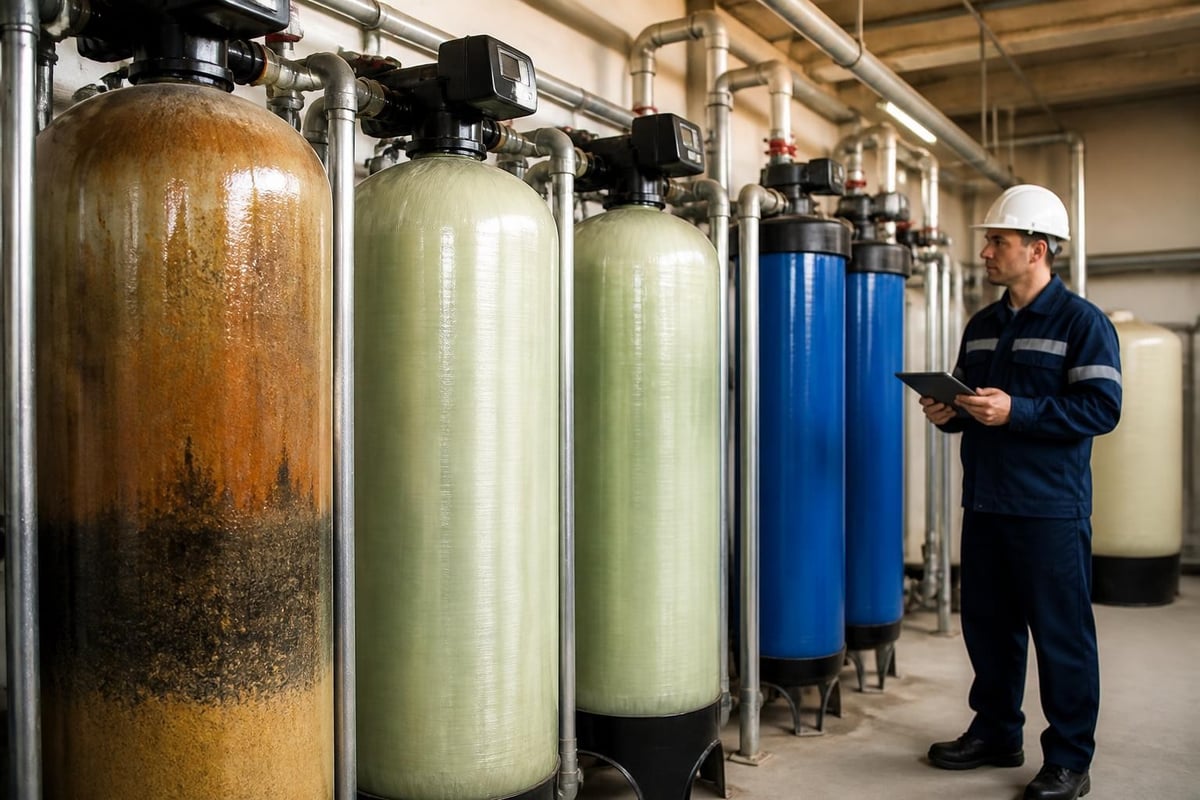
The ion exchange resin represents your conditioner's heart, swapping hardness minerals for sodium or potassium ions. Over time, resin beads become fouled with iron bacteria, organic matter, or chlorine damage, reducing treatment capacity and requiring specialized service.
Professional water conditioner service includes resin bed evaluation through visual inspection and functional testing. Severely fouled resin may require chemical cleaning with citric acid or specialty cleaners, while damaged resin necessitates complete replacement.
Regeneration optimization ensures efficient salt usage and complete hardness removal. Technicians adjust brine concentration, contact time, and backwash cycles based on water chemistry and household consumption patterns, maximizing efficiency while minimizing operating costs.
Troubleshooting Common Service Issues
Even well-maintained systems occasionally develop problems requiring diagnostic expertise and corrective action. Recognizing symptoms helps property owners communicate effectively with service technicians and understand necessary repairs.
Hard Water Breakthrough
When treated water tests hard despite proper salt levels, several factors may be responsible. Resin exhaustion, inadequate regeneration cycles, bypassed water, or mechanical failures can allow untreated water into distribution systems.
Service technicians systematically eliminate possibilities through testing and inspection. They verify bypass valve position, test resin capacity, measure regeneration brine strength, and check for mechanical seal failures that might allow untreated water to bypass the treatment bed.
| Symptom | Possible Cause | Service Solution |
|---|---|---|
| Sudden hardness increase | Control valve failure | Valve rebuild or replacement |
| Gradual hardness increase | Resin exhaustion | Chemical cleaning or resin replacement |
| Intermittent hard water | Incomplete regeneration | Adjust cycle timing and salt dose |
| Constant hard water | Bypass valve open | Reposition valve, check for damage |
Salt Bridging and Mushing
Salt-related problems frequently require professional water conditioner service despite appearing simple. Salt bridges form when humidity causes surface crystallization, creating hollow cavities beneath hardened crusts. Salt mushing occurs when dissolved salt recrystallizes at tank bottoms, forming sludge that prevents proper brine formation.
Both conditions starve regeneration cycles of necessary salt, leading to hard water breakthrough. Service includes removing affected salt, thoroughly cleaning brine tanks, and adjusting humidity exposure or salt type to prevent recurrence.
Mechanical and Electrical Failures
Modern water conditioners incorporate electronic controls, motorized valves, and programmable timers that occasionally malfunction. Component failures may cause stuck valves, continuous regeneration, or complete system shutdown.
Professional diagnostics identify failed components quickly through systematic testing. Technicians carry common replacement parts-motors, seals, switches, and circuit boards-enabling same-visit repairs for most mechanical issues. The Virginia Tech Well Water Center resources emphasize keeping service records to track component longevity and predict future maintenance needs.
Specialized Service for Different Water Challenges
Water chemistry varies dramatically across regions and sources, requiring customized water conditioner service approaches. Well water typically presents different challenges than municipal supplies, while agricultural areas introduce unique contaminants demanding specialized treatment.
Iron and Manganese Management
Properties with iron or manganese contamination require specialized service attention beyond standard hardness removal. Iron fouls resin beds rapidly, creating stubborn buildup that reduces capacity and efficiency. The University of Georgia guidance on oxidizing filters explains when conditioners require supplemental oxidation systems for effective iron removal.
Service for iron-challenged systems includes more frequent resin cleaning using specialized iron-removal chemicals. Technicians may recommend pre-oxidation systems, sediment filters, or dedicated iron filters to protect water conditioners from premature fouling and extend resin life.
Nitrate and Contaminant-Specific Treatment
Properties relying on private wells in agricultural regions may face nitrate contamination requiring specialized ion exchange resins. The Oregon State Extension bulletin on nitrates explains that standard water softener resins don't remove nitrates effectively; specialized anion exchange systems require different service protocols.
Professional water conditioner service for nitrate systems includes specific resin regeneration procedures, careful monitoring of breakthrough levels, and coordination with regular water testing programs. These systems demand more frequent professional attention due to health risks associated with nitrate exposure.
Bacterial Contamination Prevention
Water treatment systems can harbor bacteria if not properly maintained, particularly in brine tanks and resin beds. The Penn State Extension information on coliform bacteria underscores the importance of sanitary maintenance practices during water conditioner service.
Professional sanitization procedures include:
- Chlorine shock treatment of resin beds
- Brine tank disinfection and thorough rinsing
- System component sanitization before reassembly
- Post-service bacterial testing verification
- Recommendations for ongoing contamination prevention
Annual sanitization during routine service visits prevents bacterial colonization while ensuring treated water remains safe for all household uses.
Service Documentation and System Optimization
Comprehensive water conditioner service includes detailed recordkeeping that tracks system performance, identifies trends, and guides future maintenance decisions. Professional service providers maintain complete service histories documenting repairs, adjustments, test results, and recommendations.
Performance Tracking and Analysis
Service records reveal patterns indicating developing problems or optimization opportunities. Gradually increasing salt consumption might indicate resin fouling, while declining flow rates may signal media compaction or valve restrictions requiring attention.
Technicians compare current performance against manufacturer specifications and previous service results. Significant deviations trigger diagnostic investigations preventing minor issues from becoming major failures. This proactive approach extends equipment life while minimizing unexpected breakdowns.
Water Efficiency Optimization
Modern water conditioner service emphasizes efficiency, reducing salt consumption, wastewater production, and energy usage while maintaining excellent water quality. Technicians adjust regeneration frequency based on actual water hardness and consumption rather than arbitrary schedules.
Demand-initiated regeneration systems learn household patterns, regenerating only when necessary based on water volume processed and remaining resin capacity. Professional service ensures these systems accurately track usage and maintain calibration for optimal efficiency.
| Efficiency Measure | Typical Improvement | Service Intervention |
|---|---|---|
| Salt consumption | 20-30% reduction | Optimize brine concentration and regeneration frequency |
| Water usage | 15-25% reduction | Fine-tune backwash cycles and service flow rates |
| Energy consumption | 10-15% reduction | Program regeneration during off-peak hours |
| Resin longevity | 25-40% extension | Regular cleaning and fouling prevention |
Long-Term Investment Protection Through Service
Regular water conditioner service protects significant equipment investments while ensuring continuous access to quality water. Systems receiving proper professional attention regularly outlast neglected units by years, delivering better performance throughout their service lives.
Warranty Compliance and Protection
Most manufacturer warranties require annual professional service as a condition of coverage. Documented service history proves compliance, protecting warranty claims should component failures occur. Many manufacturers void warranties entirely when service requirements aren't met, leaving owners responsible for expensive repairs.
Professional service providers issue detailed reports documenting all maintenance activities, test results, and component conditions. These records demonstrate warranty compliance while providing valuable information for insurance claims, home sales, or equipment upgrades.
System Upgrade and Replacement Planning
Experienced service technicians recognize when systems approach end-of-life or when upgraded technology offers significant benefits. Rather than waiting for catastrophic failures, proactive replacement planning prevents water quality interruptions while taking advantage of improved efficiency and features.
Service evaluations might reveal that newer systems offer substantially better efficiency, reducing operating costs sufficiently to justify upgrade investments. Alternatively, technicians may recommend supplemental treatment addressing newly identified water quality concerns or changing household needs.
Maintaining your water conditioning system through regular professional service ensures reliable performance, protects your investment, and delivers consistently high-quality water for years. Whether you operate a residential well system or manage commercial water treatment infrastructure, comprehensive maintenance protocols prevent problems while optimizing efficiency and longevity. Terrabuilds Group brings extensive experience in water treatment systems, borehole engineering, and complete water purification solutions, offering expert service programs tailored to your specific water challenges and ensuring your investment continues delivering premium results throughout its operational life.